Repair or Replace a Flex Pipe? Wrap, Weld-In or Direct-Fit Compared
Reviewed 2026-11-03. Checked against the sources listed below. This is general information, not a substitute for a mechanic's inspection.
Quick answer
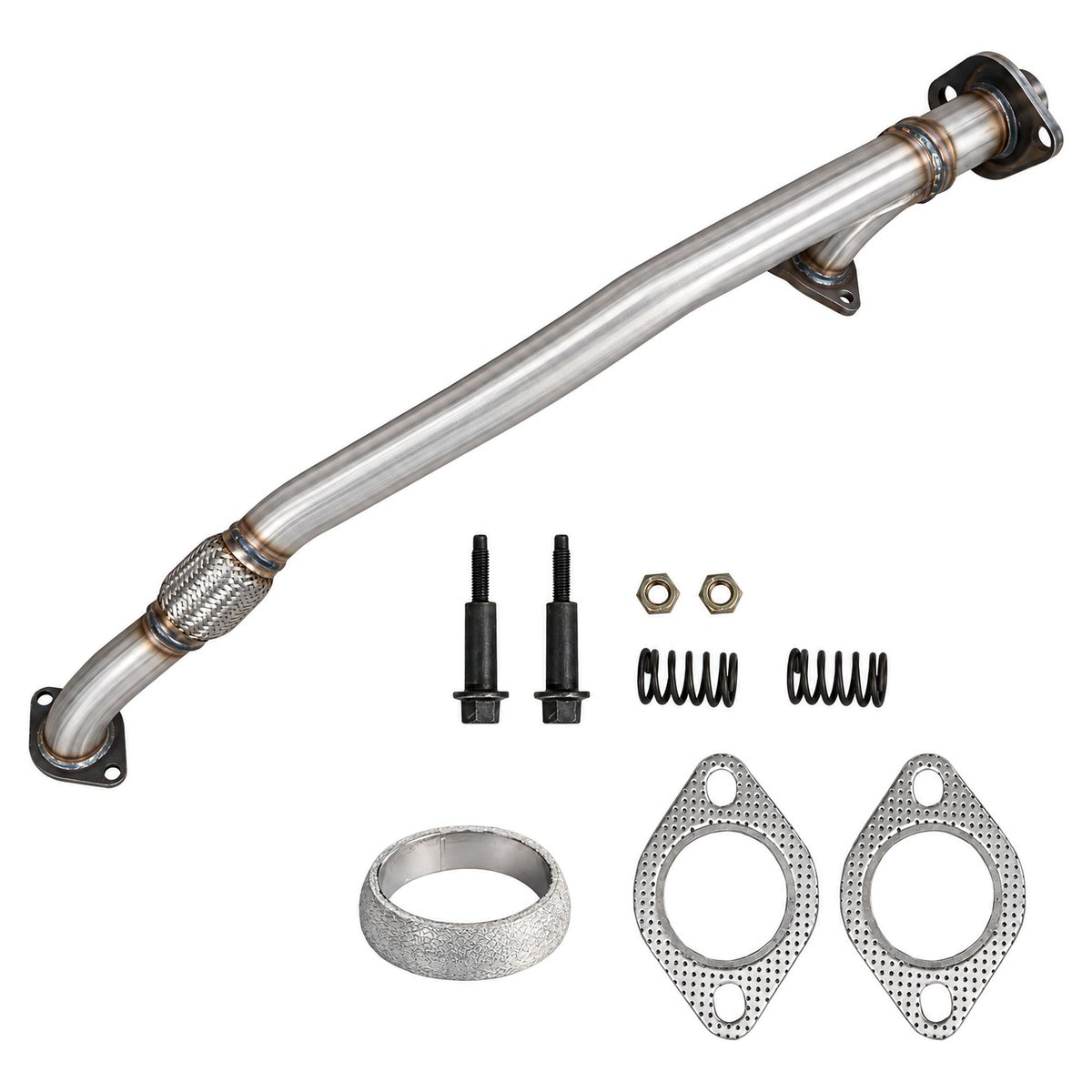
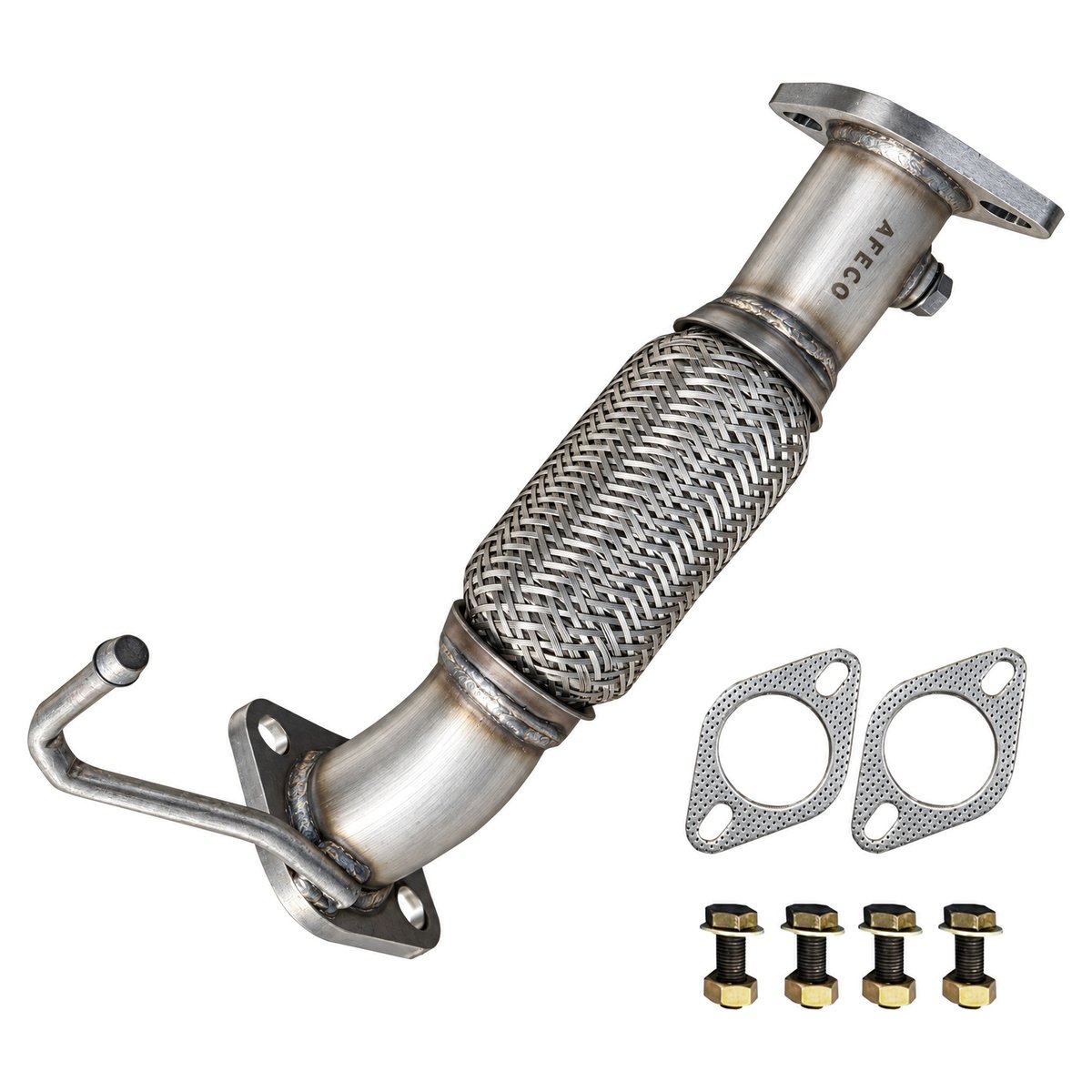
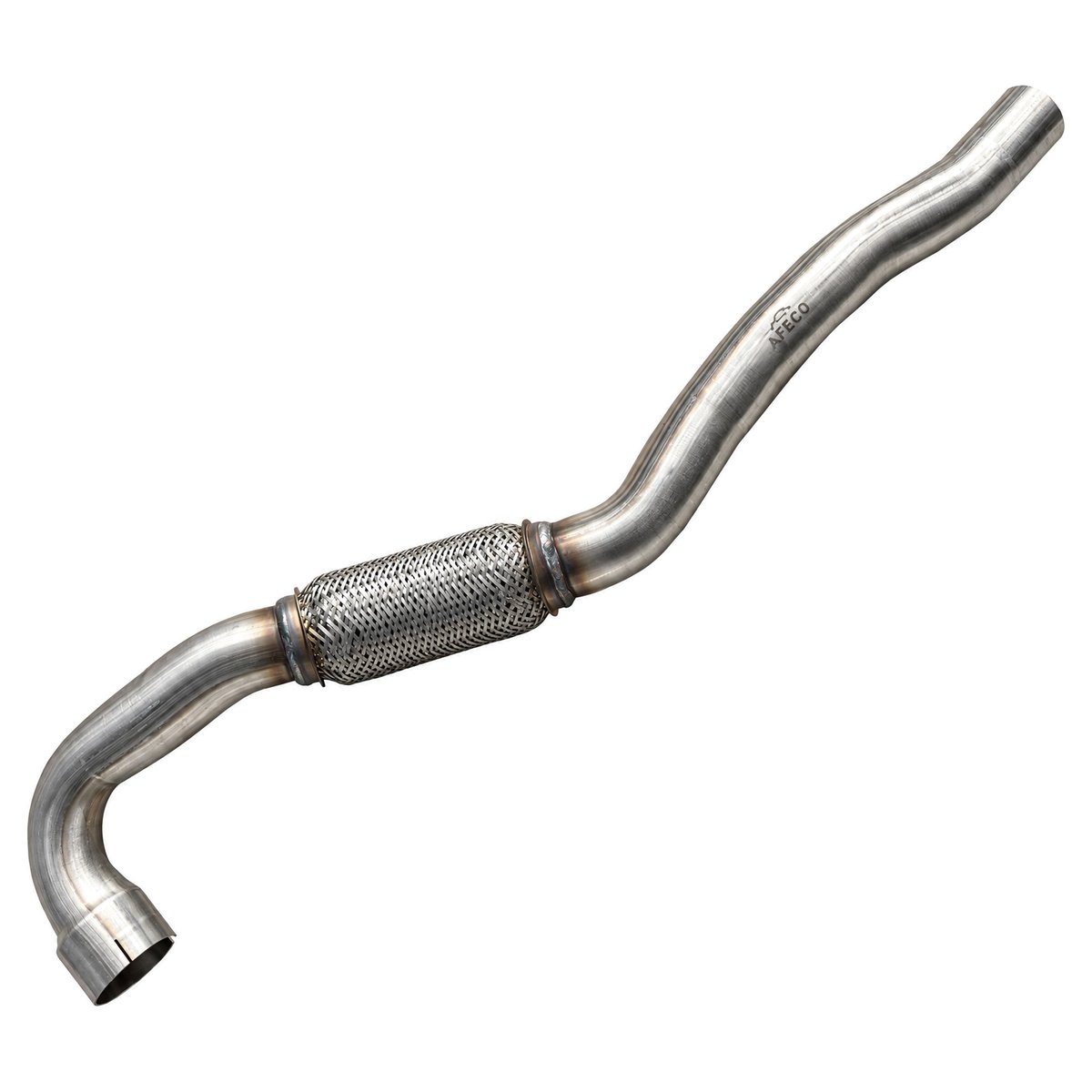
A wrap or sealant is a short-term patch to get you home. A weld-in flex section is a real repair if the pipes around it are still solid and you have a shop that welds. A direct-fit assembly is the simplest full repair when the pipe is rusted or you want to bolt it in without cutting and welding.
The three options compared
| Wrap or sealant | Weld-in flex section | Direct-fit assembly | |
|---|---|---|---|
| Lasts | Short term | Long term, if the pipes are sound | Long term |
| Tools needed | Hand tools | Cutting and welding gear | Wrenches, jack stands |
| Fixes rusty pipes or flanges? | No | Only the part it replaces | Yes, the whole assembly is new |
| Fits your exact car | Universal | Must be sized and positioned | Made for listed vehicles |
| Best for | Getting to the shop | Solid pipes, one worn section | Rust, or bolt-in repair |
How to choose
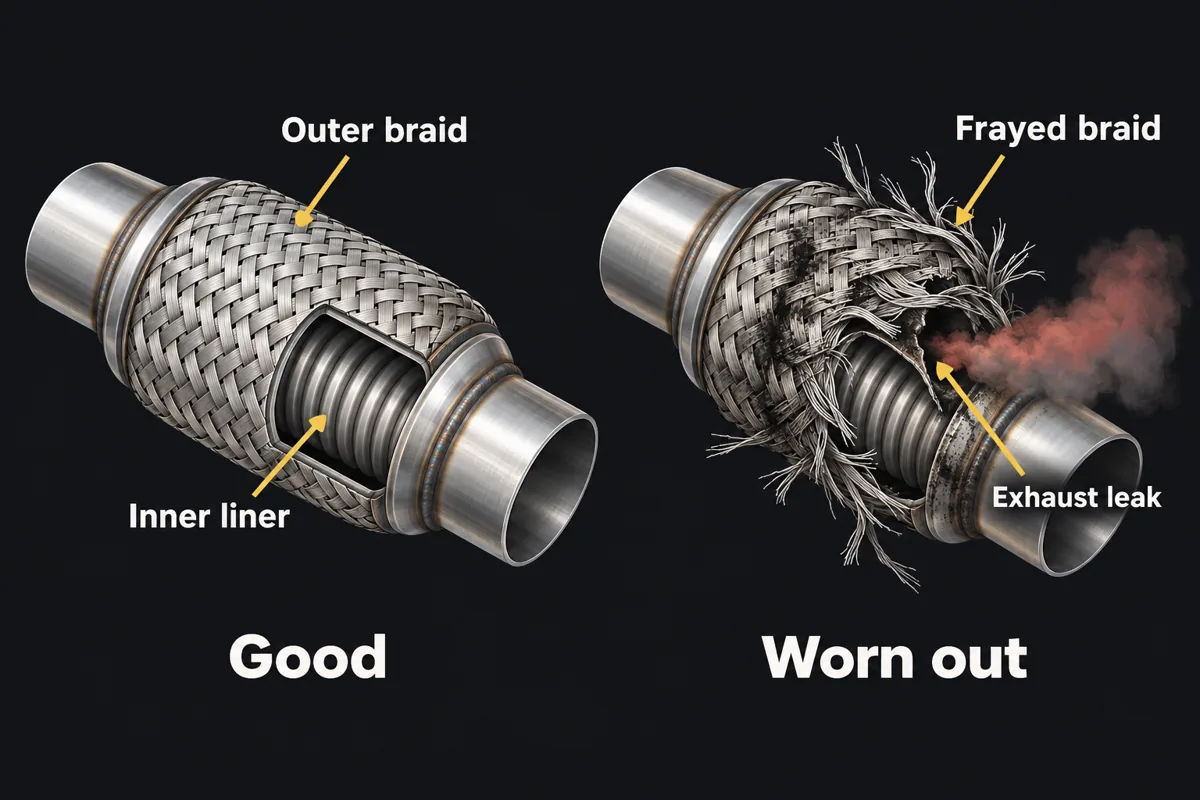
- Look at the pipes and flanges next to the flex section. If they are rusted or thin, a weld-in section has nothing solid to weld to. Choose a full assembly.
- Look at where the leak is. Soot at a flange can be only a gasket. Our symptoms guide shows how to tell.
- Think about what you can do at home. A bolt-in part suits a driveway job if the old bolts come loose. A weld-in section needs a shop.
- Check the fit. A direct-fit part only works if it matches your exact year, engine and drive type.
Do these with any option
- Check the engine and transmission mounts. Worn mounts overwork the flex section, and any repair will wear out early.
- Fit new gaskets whenever you take the pipe off. See do you need new gaskets and bolts.
- Do not twist or stretch the braid during fitting, and tighten flanges evenly.
Is it safe to wait?
A small leak can start as only a noise, but it can get worse, and exhaust can get into the cabin. Carbon monoxide has no color or smell. If you smell exhaust inside, or anyone gets a headache or feels dizzy, open the windows and get it repaired before driving more.
Related guides
Related AFECO parts
Direct-fit flex pipe assemblies for the vehicles listed on each page.
Guides for your vehicle
- 2011-2019 Dodge Journey 3.6L V6 Flex Pipe
- Dodge Journey 3.6L Exhaust Leak: How to Find It and What to Check
- Hyundai Elantra Exhaust Rattle: What to Check on 2011-2016 Cars
- Hyundai Elantra Flex Pipe
- 2007-2020 Mitsubishi Outlander 3.0L V6 Flex Pipe
- Mitsubishi Outlander 3.0L Loud Exhaust: Flex Pipe or Muffler?