What Does a Flex Pipe Do? Why Your Exhaust Needs One
Reviewed 2026-11-03. Checked against the sources listed below. This is general information, not a substitute for a mechanic's inspection.
Quick answer
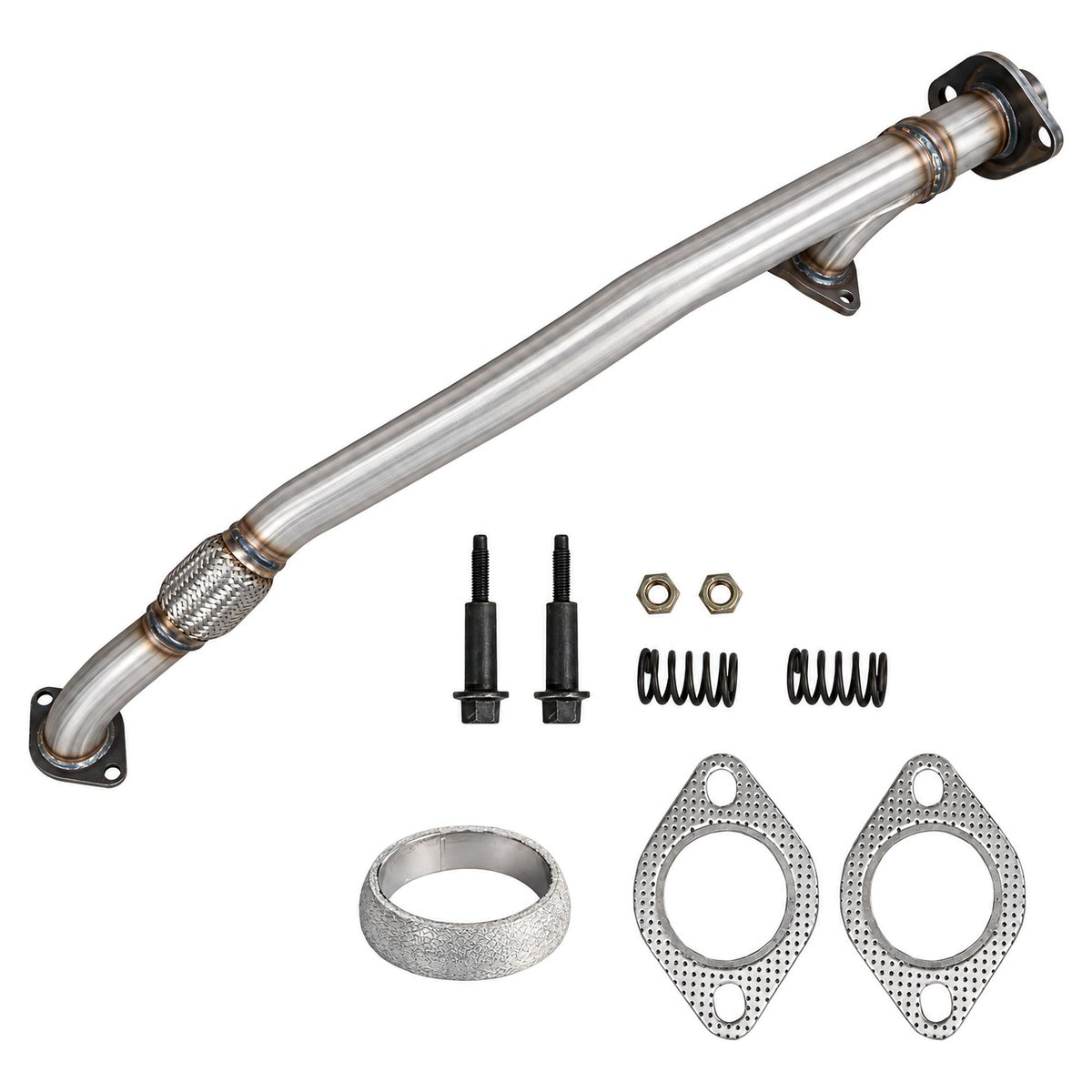
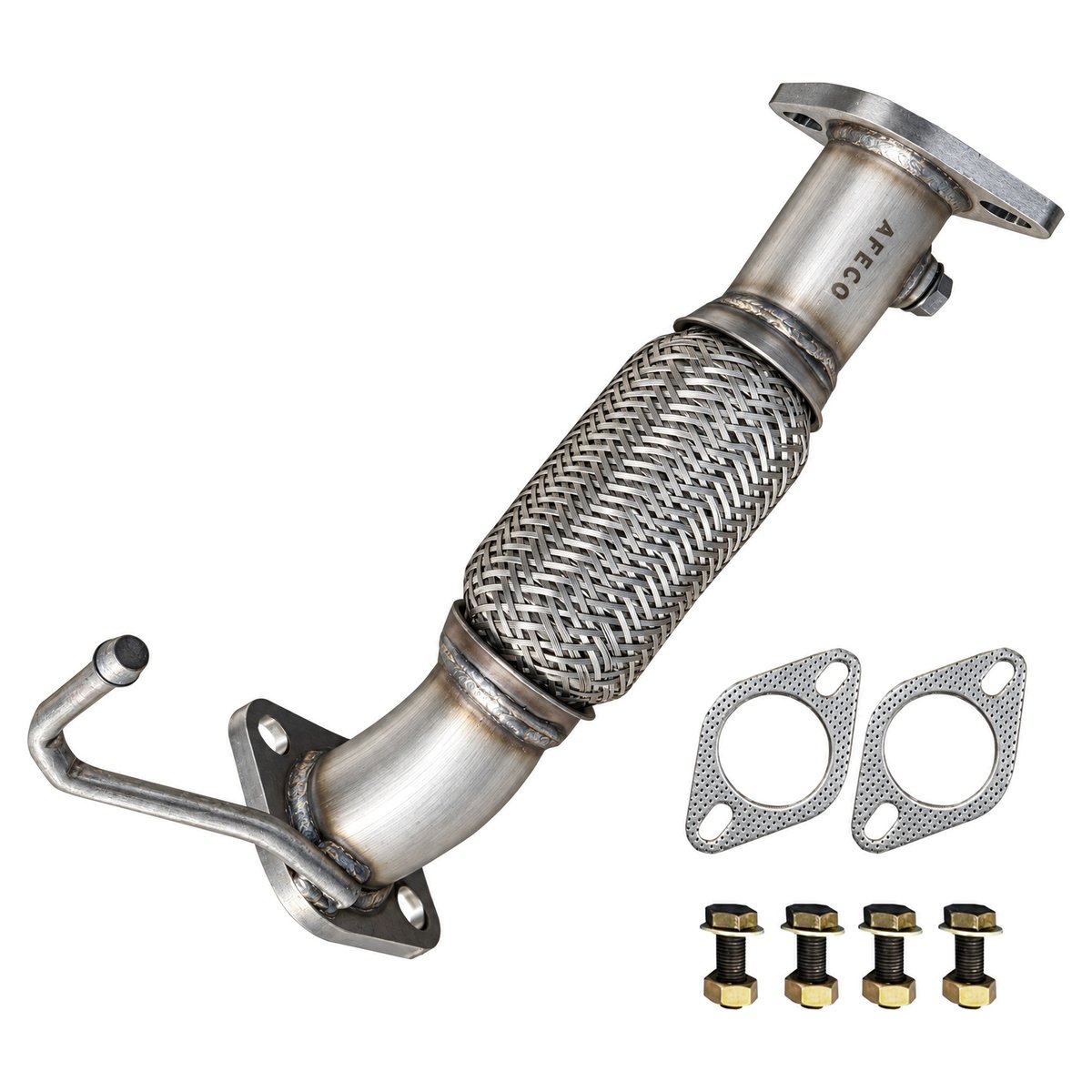
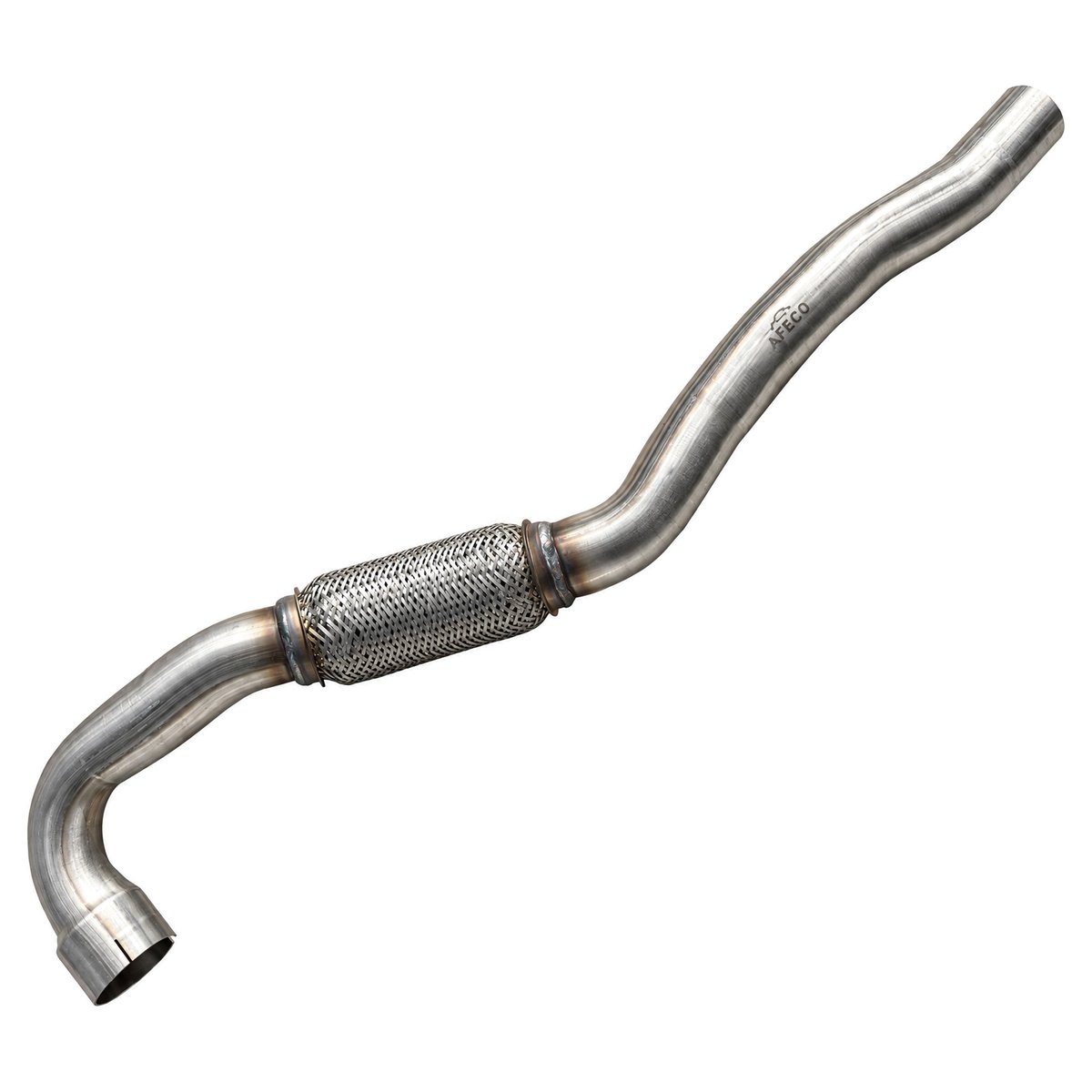
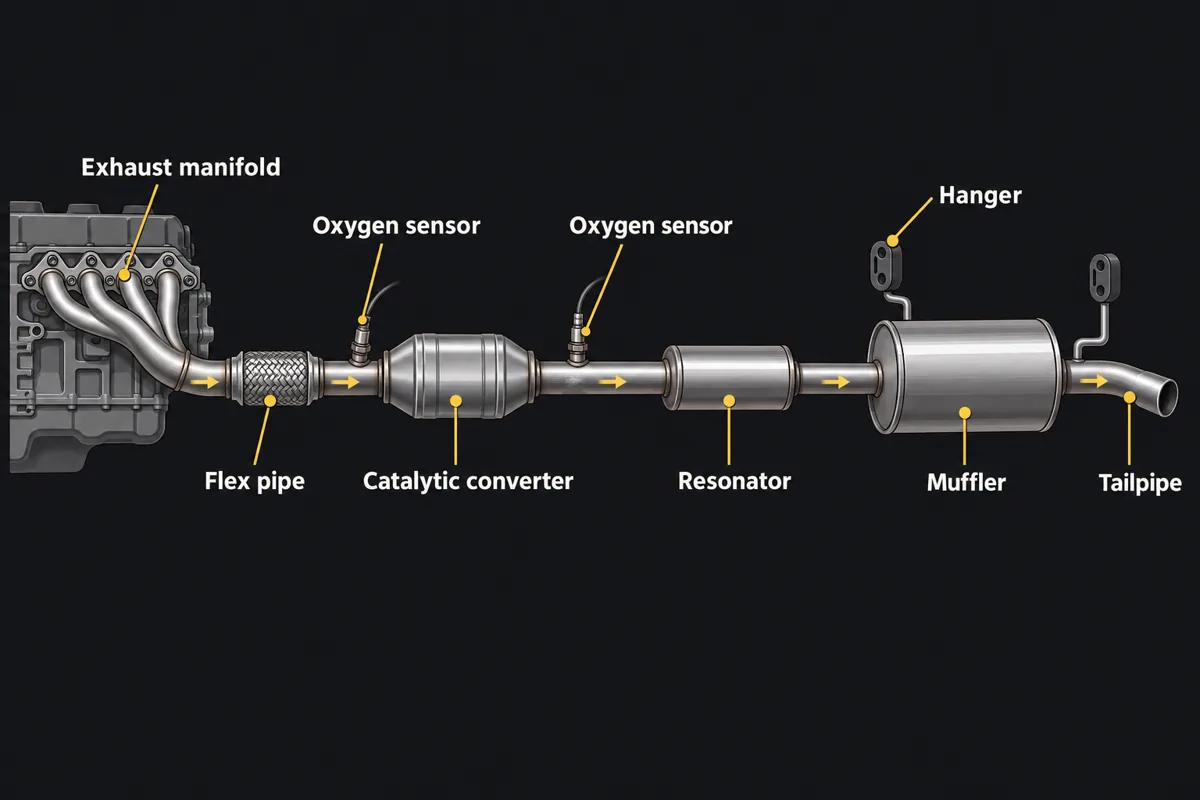
A flex pipe is the flexible, woven section near the front of the exhaust. It lets the engine move on its rubber mounts without bending or cracking the solid pipes behind it. Without that give, the movement would go straight into the exhaust joints.
Why the engine moves
An engine is not bolted solid to the car. It sits on rubber mounts that soak up vibration, so it rocks when you accelerate, brake or shift. The exhaust bolts to the engine at one end and hangs from the body at the other, so something between them has to give.
That matters most on many front-wheel-drive cars, where the engine sits sideways and its rocking pulls the front pipe back and forth. Not every car uses a braided section: some designs use a spring-loaded flange or a ball-and-socket joint to do the same job.
What is inside one
| Layer | What it does |
|---|---|
| Outer braid | Protects the section and holds it together |
| Inner liner or bellows | Carries the exhaust gas and lets the section bend |
| Solid ends with flanges | Bolt it to the rest of the exhaust |
What happens when it wears out
Years of movement, heat and road salt wear through the braid and the liner. Then you get a rumble on acceleration, puffing or hissing, black soot on the braid and an exhaust smell. A squeak or creak at idle can also come from the flexible joint. A leak ahead of an oxygen sensor can upset its readings and set a check engine light.
How to make a new one last
- Replace worn engine and transmission mounts. More engine movement means more flexing.
- Do not twist or stretch the braid when you fit it, and do not let the pipe hang from it.
- Line up the rest of the exhaust before tightening, so the flex section is not left under strain.
- Tighten the flanges evenly and fit new gaskets.
Related guides
Related AFECO parts
Direct-fit flex pipe assemblies for the vehicles listed on each page.
Guides for your vehicle
- 2011-2019 Dodge Journey 3.6L V6 Flex Pipe
- Dodge Journey 3.6L Exhaust Leak: How to Find It and What to Check
- Hyundai Elantra Exhaust Rattle: What to Check on 2011-2016 Cars
- Hyundai Elantra Flex Pipe
- 2007-2020 Mitsubishi Outlander 3.0L V6 Flex Pipe
- Mitsubishi Outlander 3.0L Loud Exhaust: Flex Pipe or Muffler?