Exhaust System Parts Explained, From the Engine to the Tailpipe
Reviewed 2026-10-03. Checked against the sources listed below. This is general information, not a substitute for a mechanic's inspection.
Quick answer
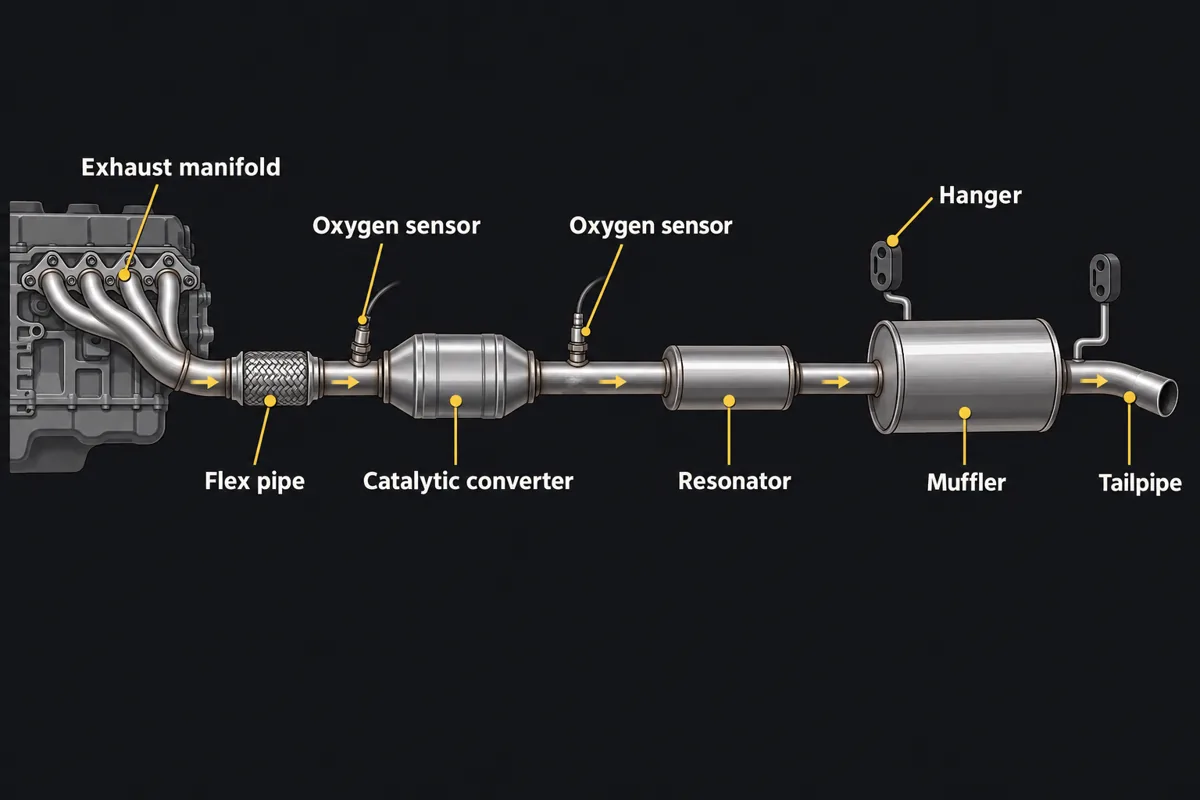
Exhaust gas leaves the engine through the exhaust manifold, passes a flex pipe that lets the engine move, gets cleaned in the catalytic converter (watched by oxygen sensors), and is quieted by the resonator and muffler before leaving through the tailpipe. Gaskets, clamps and hangers seal the joints and hold it all up. Exact layouts vary by vehicle.
The parts, front to back
| Part | What it does | Common problem |
|---|---|---|
| Exhaust manifold | Collects exhaust from each cylinder into one outlet | Cracks, leaking gasket, ticking on cold start |
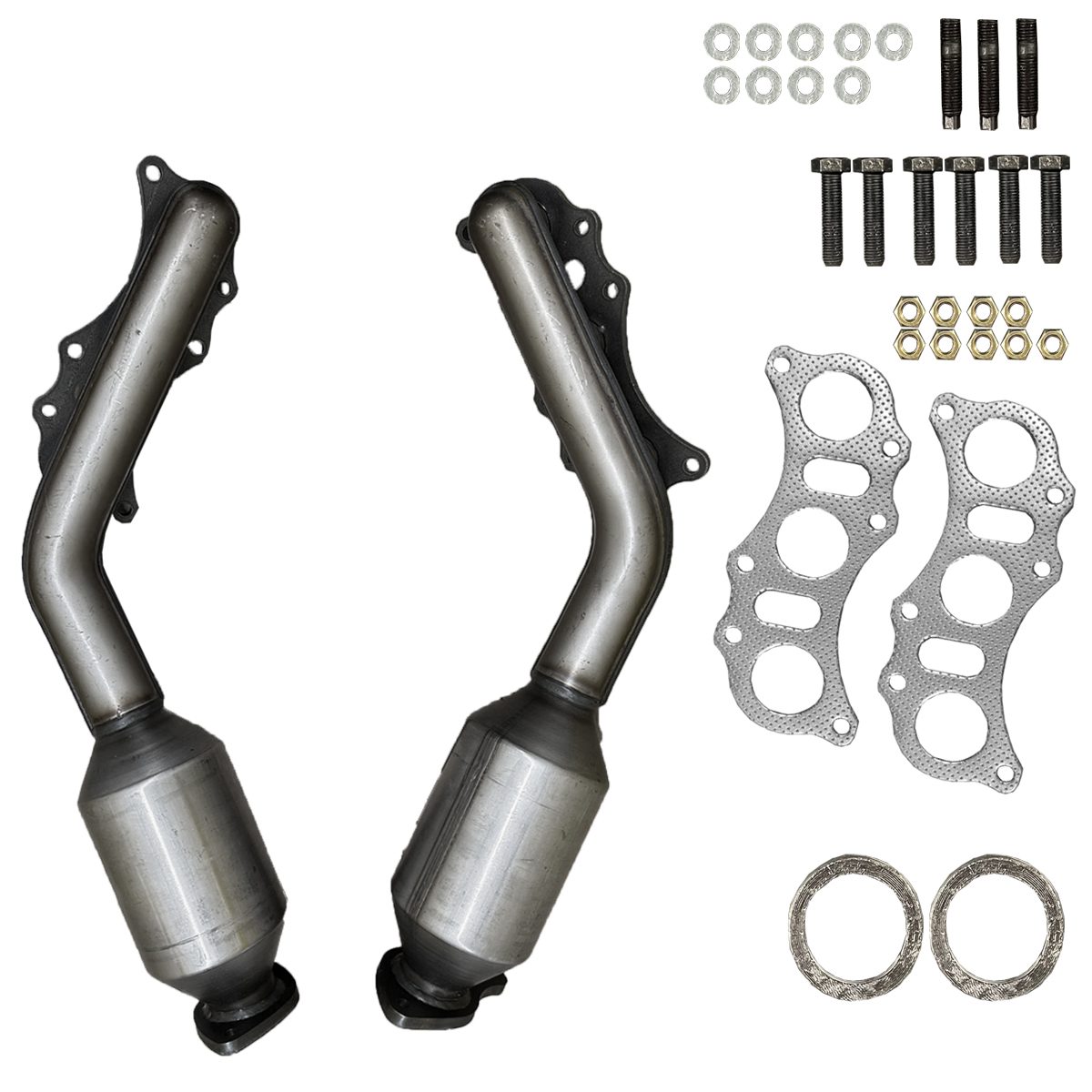
| Manifold converter (some engines) | A catalytic converter built into the manifold | Cracks, P0420 or P0430 |
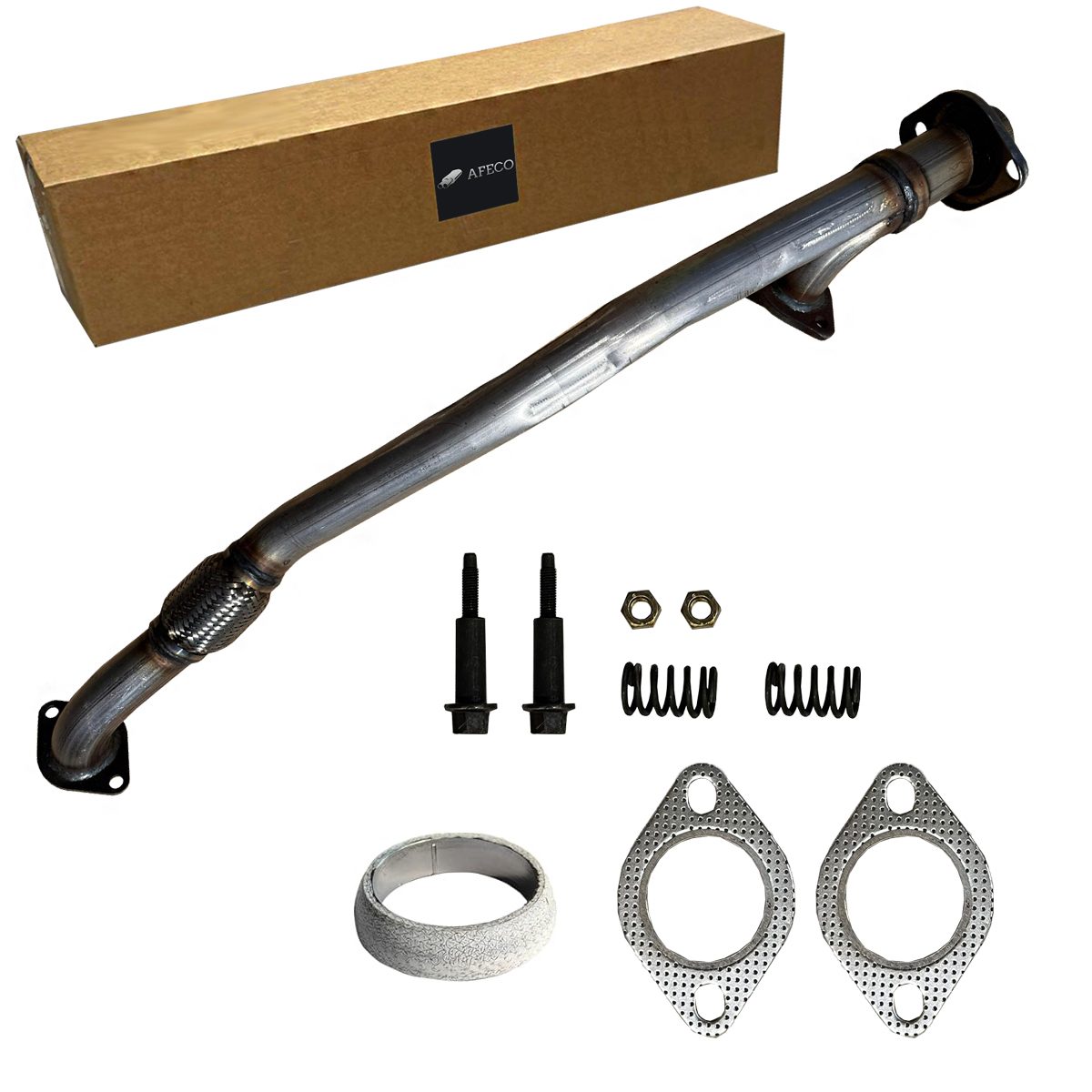
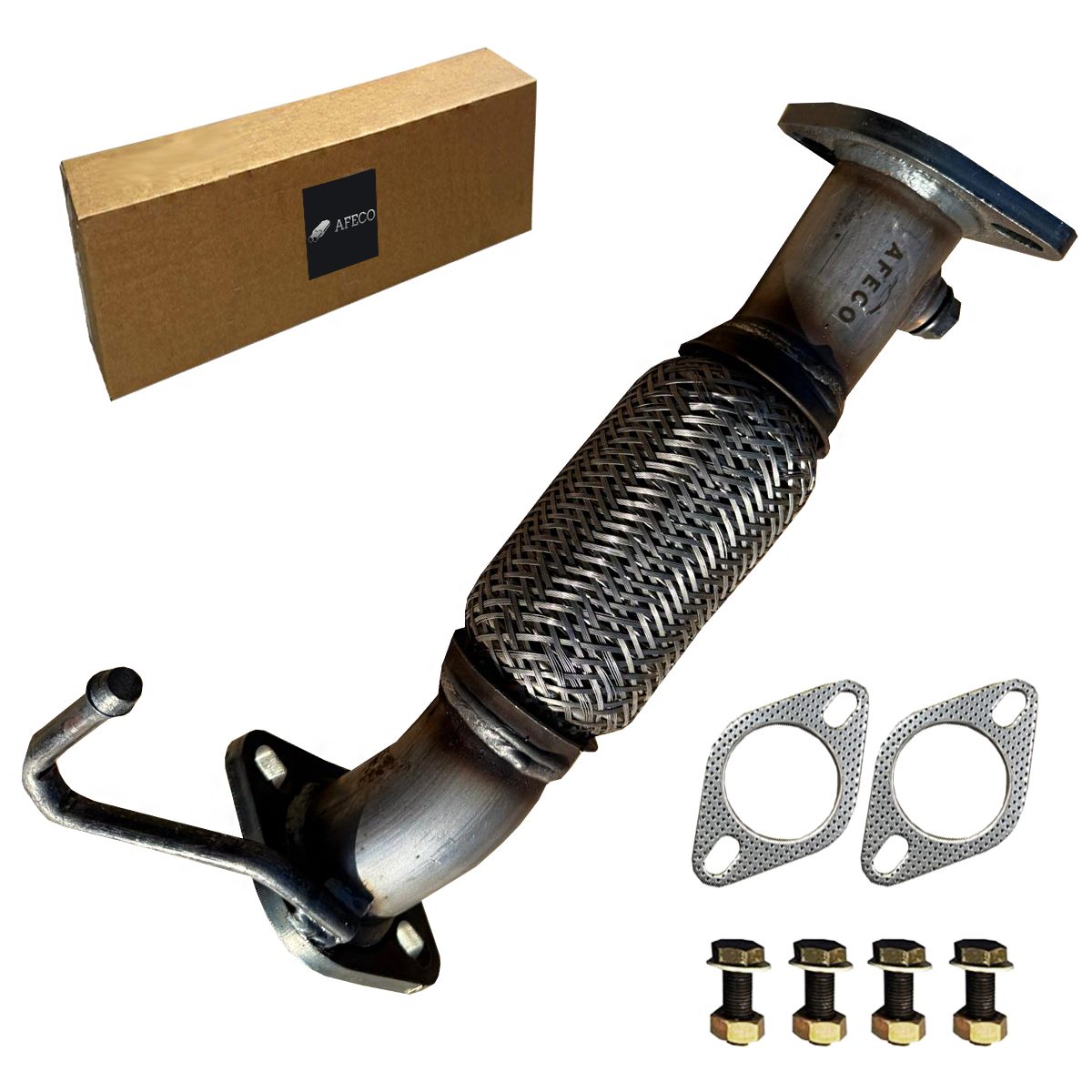
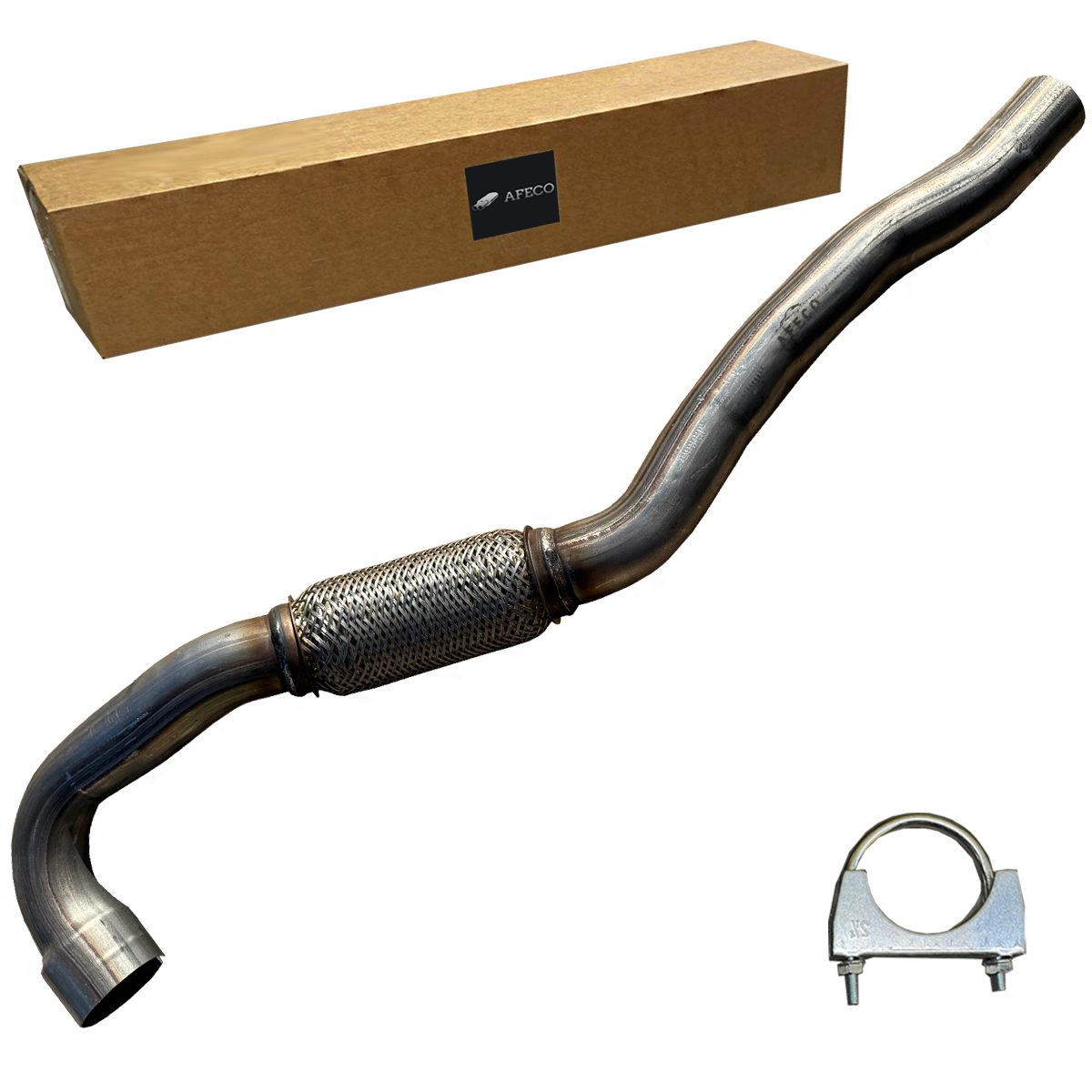
| Flex pipe | Lets the engine rock on its mounts without cracking the exhaust | Frayed braid, leak, loud rumble |
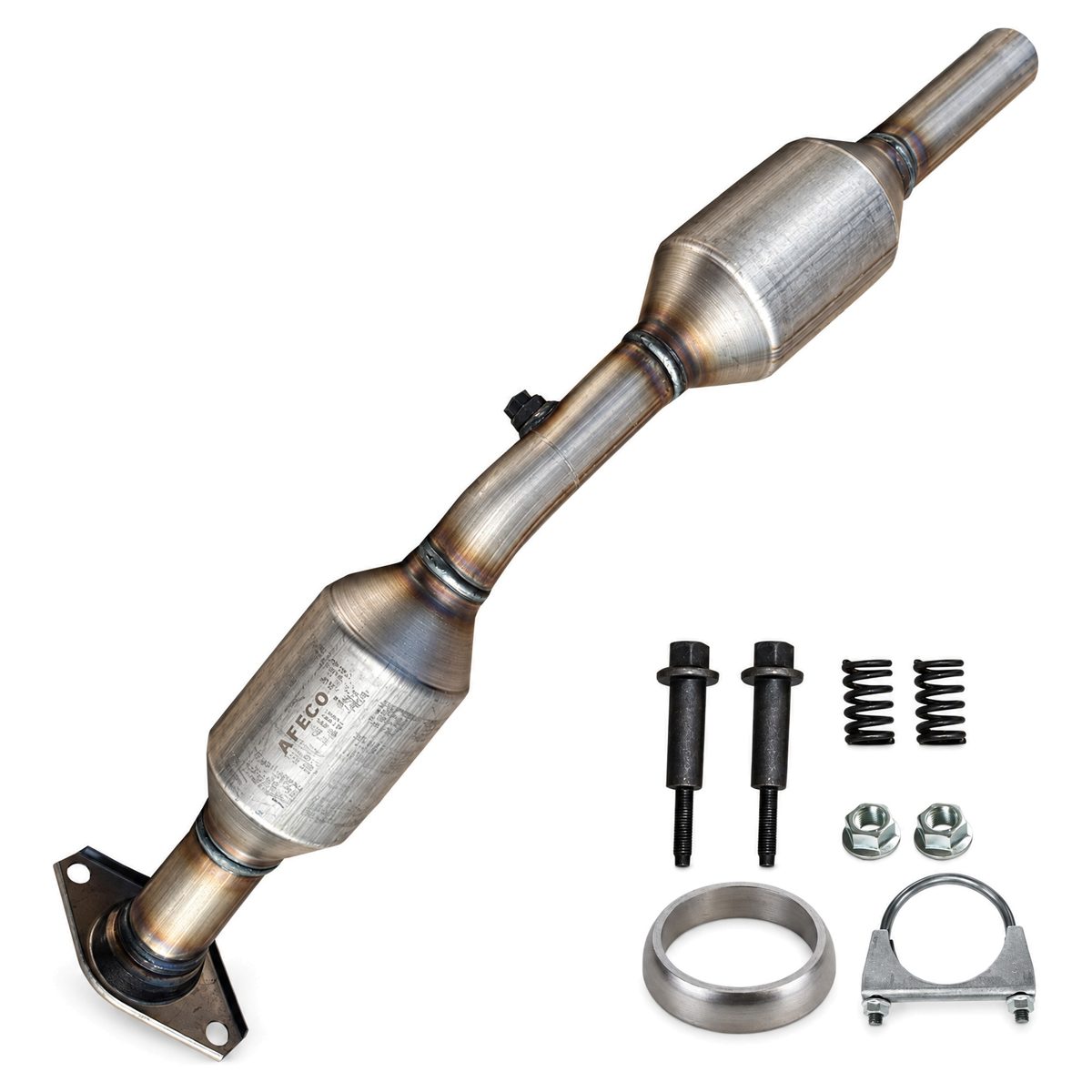
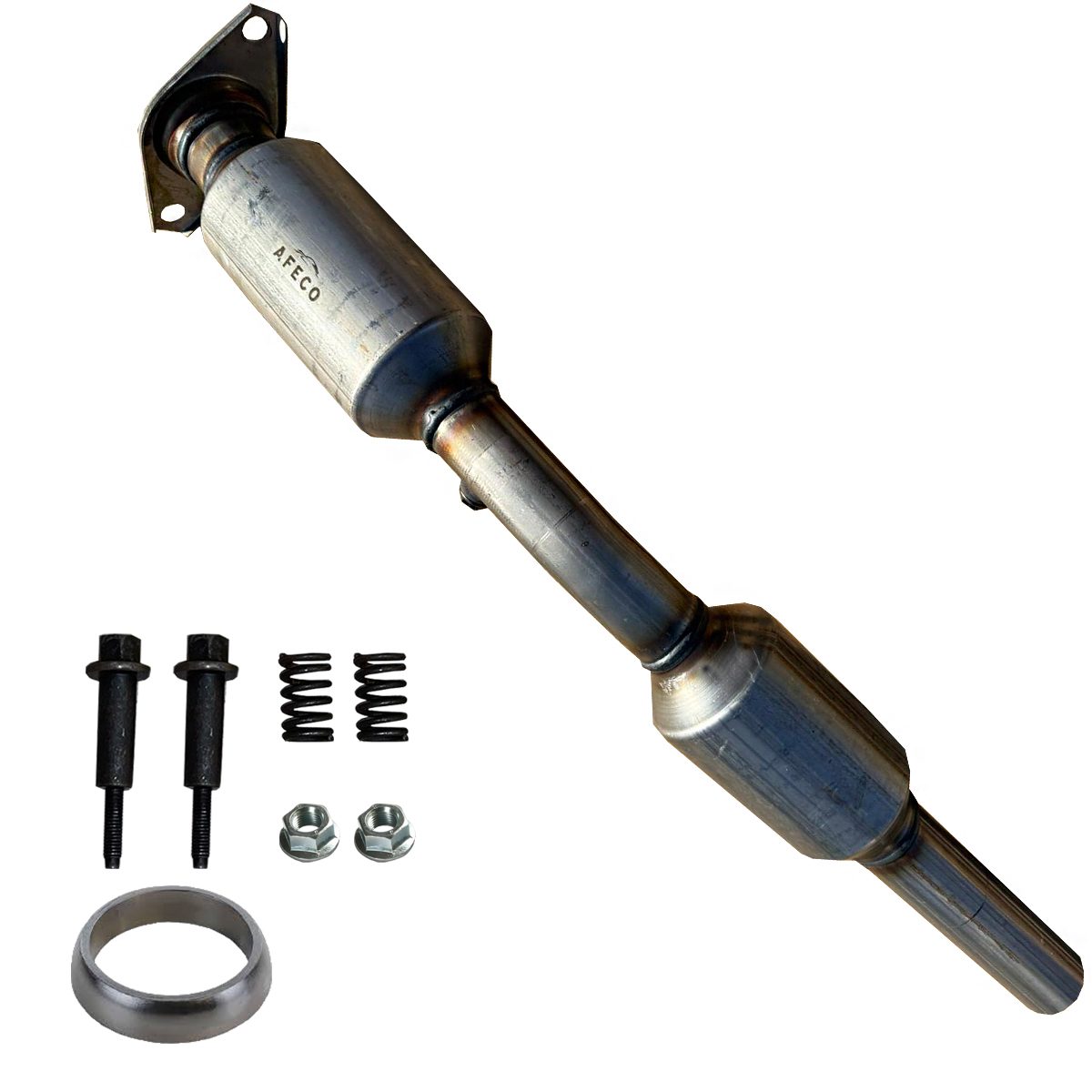
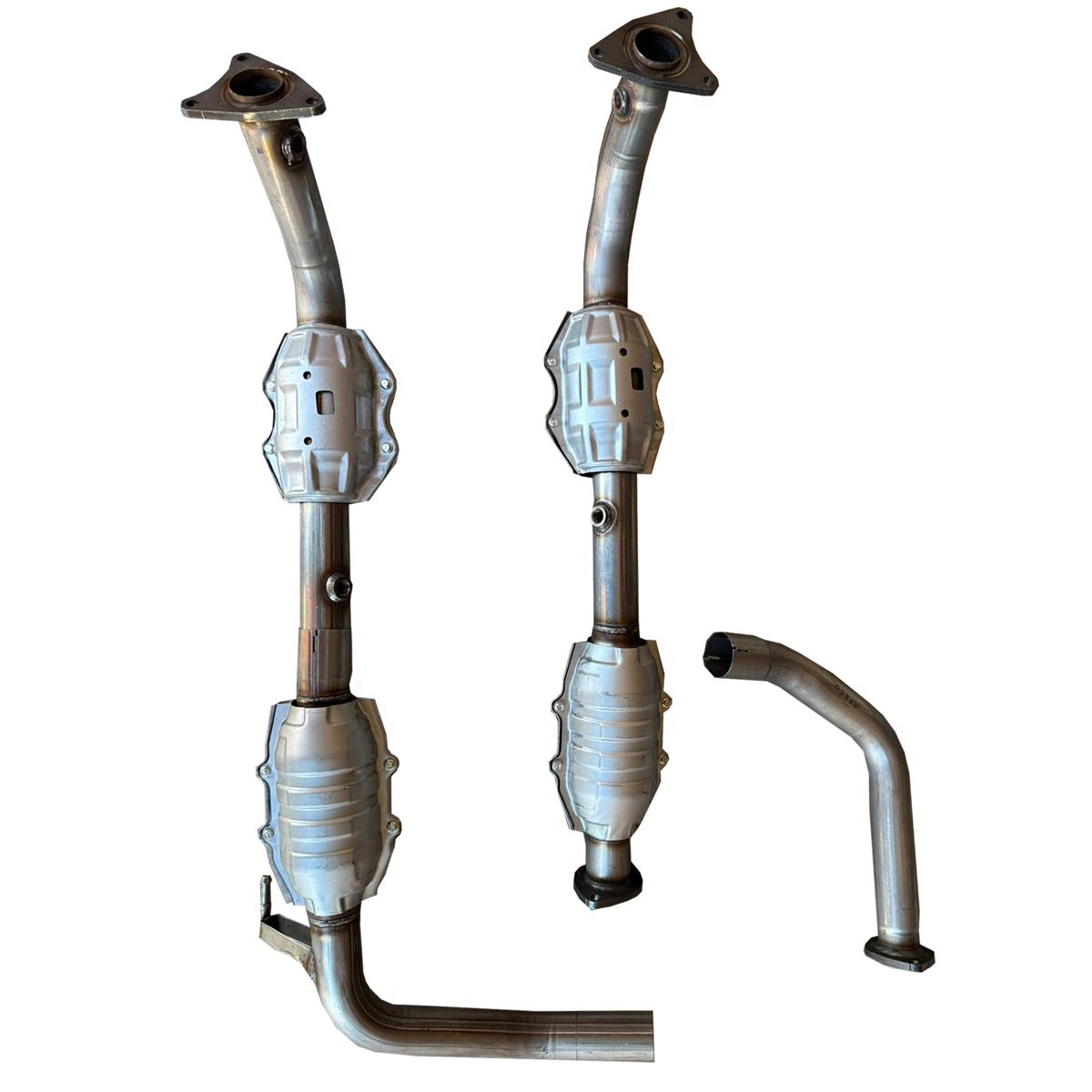
| Front catalytic converter | Turns harmful gases into carbon dioxide and water vapour | Clogging, rattling core, catalyst codes |
| Oxygen sensors | Measure oxygen before and after the converter | Slow signal, fuel and catalyst codes |
| Resonator | Tunes the sound and cuts drone | Rust, rattle |
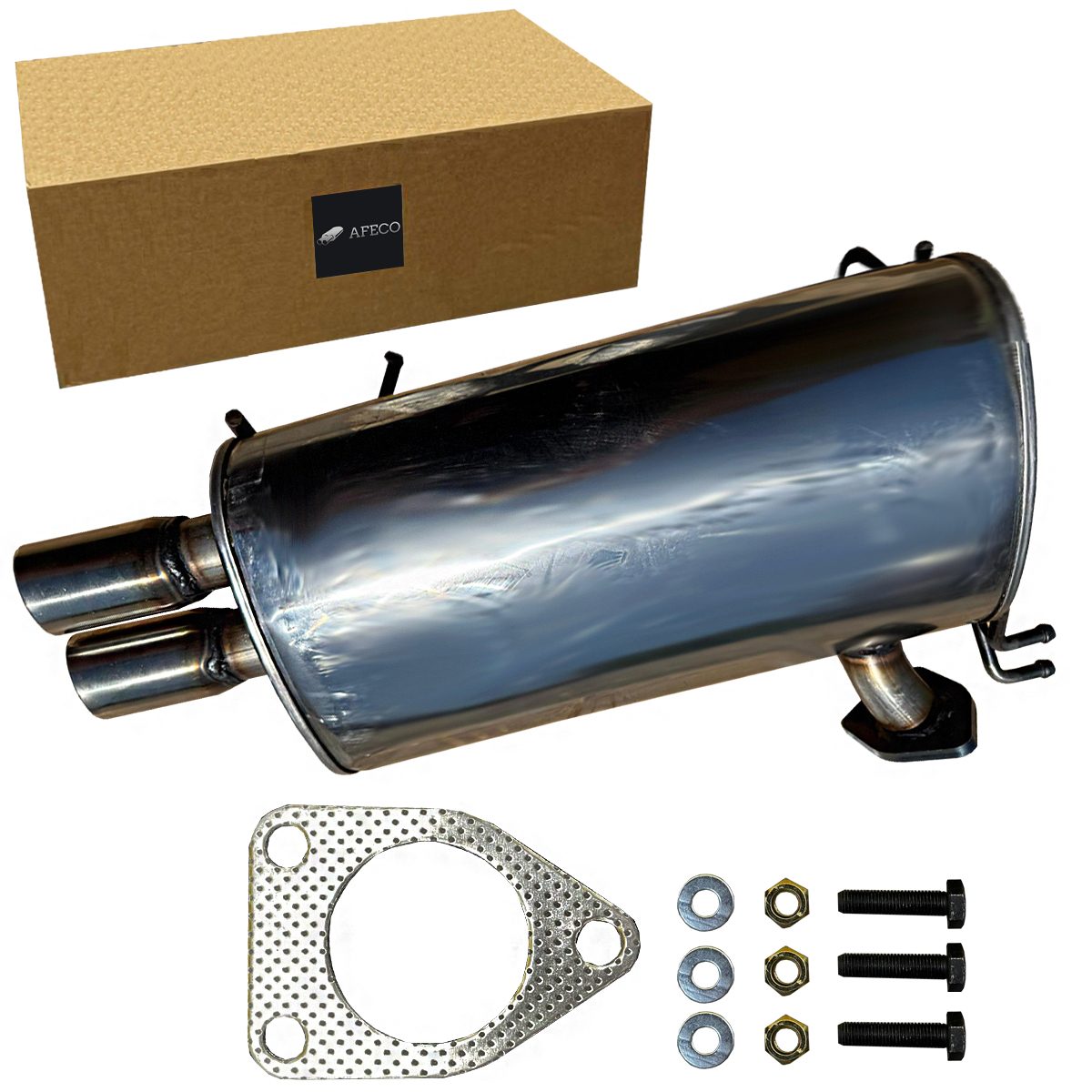
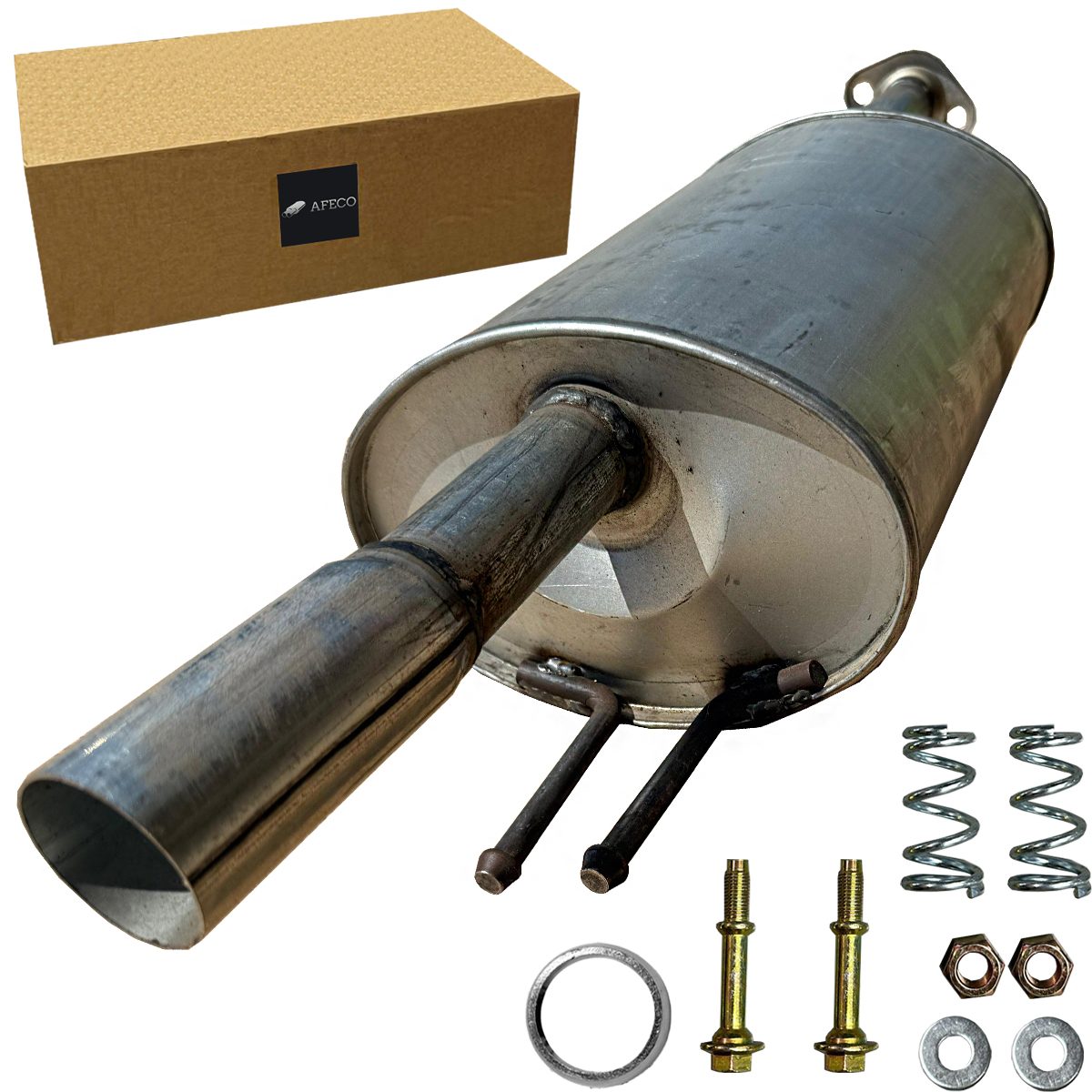
| Muffler | Quiets the engine sound | Rust holes, loud exhaust, internal rattle |
| Gaskets and clamps | Seal the joints | Leaks, soot marks |
| Hangers | Hold the system in place and absorb movement | Clunks, sagging pipe |
How the parts work together
- The manifold and flex pipe take the most heat and movement, so they are common leak points. A leak here also affects the upstream oxygen sensor.
- The converter only works well when the engine's fuel mixture is right, which is why the oxygen sensors sit on both sides of it.
- The muffler and resonator handle sound. A hole there is mainly a noise problem, but any leak can let fumes escape.
Why exact fit matters
Each vehicle has its own pipe bends, flange shapes, sensor positions and hanger locations. A direct-fit part copies the original so it lines up with the factory mounting points. That is why parts are listed by year, make, model and engine, and sometimes by trim or cab size. Always match the part number on the listing to your exact vehicle before ordering.
Related AFECO parts
Converters, flex pipes and mufflers listed for the exact vehicles on each page.
Guides for your vehicle
- 2011-2019 Dodge Journey 3.6L V6 Flex Pipe
- 2006-2011 Honda Civic 1.8L and Civic Hybrid 1.3L Muffler
- Hyundai Elantra Flex Pipe
- 2007-2020 Mitsubishi Outlander 3.0L V6 Flex Pipe
- 2007-2013 Mitsubishi Outlander 3.0L V6 Muffler
- Toyota 4Runner, Tacoma and FJ Cruiser 4.0L V6 Manifold Catalytic Converters
- 2003-2008 Toyota Corolla 1.8L Catalytic Converter
- 2009-2013 Toyota Corolla 1.8L Catalytic Converter
- Toyota Tundra 5.7L (2007-2019) and Sequoia 5.7L (2008-2011) Catalytic Converters