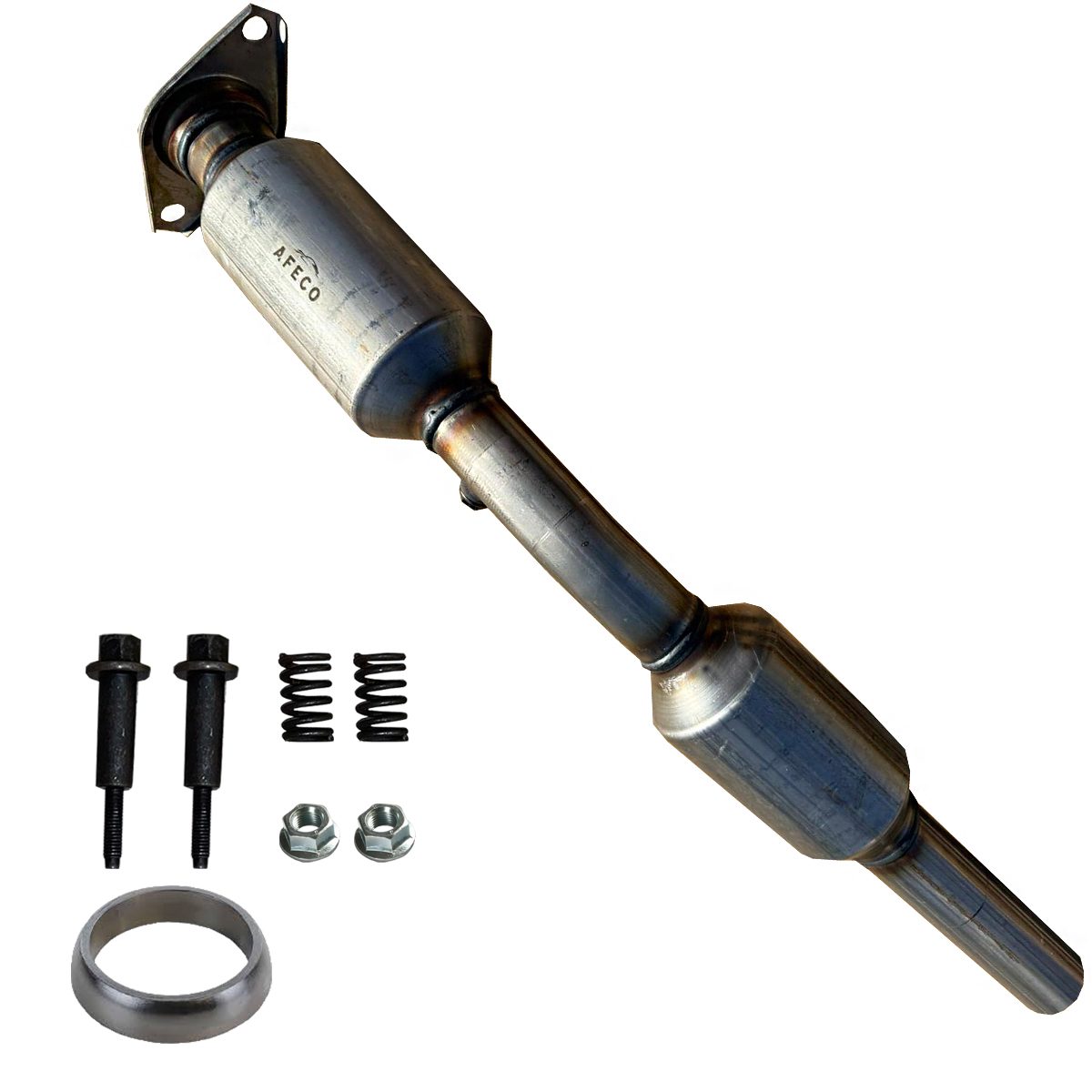
2003-2008 Toyota Corolla 1.8L Catalytic Converter Guide (Also Matrix and Vibe), and How It Differs From 2009+
Reviewed 2026-10-03. Checked against the sources listed below. This is general information, not a substitute for a mechanic's inspection.
Quick answer
The 2003-2008 Toyota Corolla 1.8L, 2003-2008 Toyota Matrix 1.8L and 2003-2008 Pontiac Vibe 1.8L with front-wheel drive share one front catalytic converter. The most common ordering mistake is the model year: 2008 and 2009 look alike but use different converters. Confirm your exact model year and engine from your VIN before you buy.
Exact fit
| Years | Make | Model | Engine | Drive |
|---|---|---|---|---|
| 2003-2008 | Toyota | Corolla | 1.8L 4-cylinder | Front-wheel drive |
| 2003-2008 | Toyota | Matrix | 1.8L 4-cylinder | Front-wheel drive |
| 2003-2008 | Pontiac | Vibe | 1.8L 4-cylinder | Front-wheel drive |
Not for: all-wheel-drive Matrix or Vibe, or 2009 and newer models.
2008 or 2009? Which converter you need
| Your model year | AFECO part |
|---|---|
| 2003 to 2008 (front-wheel drive, 1.8L) | 51274 (this guide) |
| 2009 to 2013 Corolla, 2009-2011 Matrix, 2009-2010 Vibe (1.8L) | 51360 |
The model year is the 10th character of your VIN, and the NHTSA VIN decoder shows it in plain words along with the engine size. Go by the VIN, not by when the car was bought.
Is there a recall?
We checked NHTSA's recall database for every model year on this page (2003-2008 Corolla, Matrix and Vibe). None of the safety recalls listed for these vehicles involve the exhaust system or the catalytic converter. Enter your VIN at nhtsa.gov/recalls for the current answer on your car.
Older car, emissions test coming up?
At this age, many owners shop for a converter because of a failed emissions test. A few things help:
- Do not clear the code right before the test. Clearing codes resets the readiness monitors, and the car can be turned away as "not ready". In Texas, 2001 and newer vehicles may have only one monitor not ready.
- Fix the cause, not only the converter. On high-mileage engines, oil burning, misfires and worn oxygen sensors are common reasons converters fail. A new converter will not last if the engine is still sending it oil or raw fuel.
- After the repair, drive normally for a few days with city and highway driving so the monitors complete before you retest.
Before you replace it
- Scan for every code, not just P0420, and fix misfire or fuel trim codes first.
- Check for exhaust leaks at the manifold joint and around the oxygen sensors.
- Test the downstream oxygen sensor.
- Check for oil burning: blue smoke at startup or oil loss between changes.
Fitting tips
The AFECO 51274 is a direct-fit part and includes hardware. Soak the old nuts and bolts with penetrating oil, use a new gasket, and keep the oxygen sensor wiring clear of the hot converter when you reinstall it.