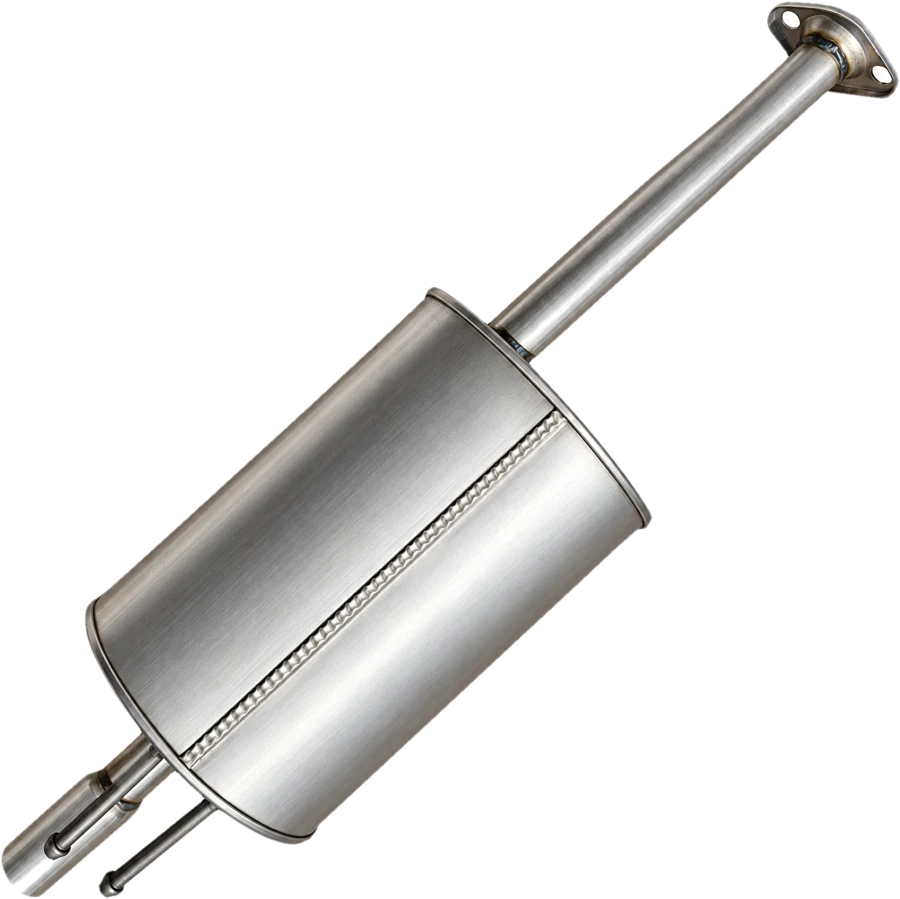
Honda Civic Loud Muffler: What to Check on 2006-2011 Cars
Reviewed 2026-11-03. Checked against the sources listed below. This is general information, not a substitute for a mechanic's inspection.
Quick answer
A 2006-2011 Honda Civic that has become loud at the back usually has a rust hole or a split seam in the muffler or the pipe just ahead of it. Check both before buying, because the pipe can fail too. If the only symptom is a rattle, look at the hangers and heat shields first.
Check it yourself in 5 minutes
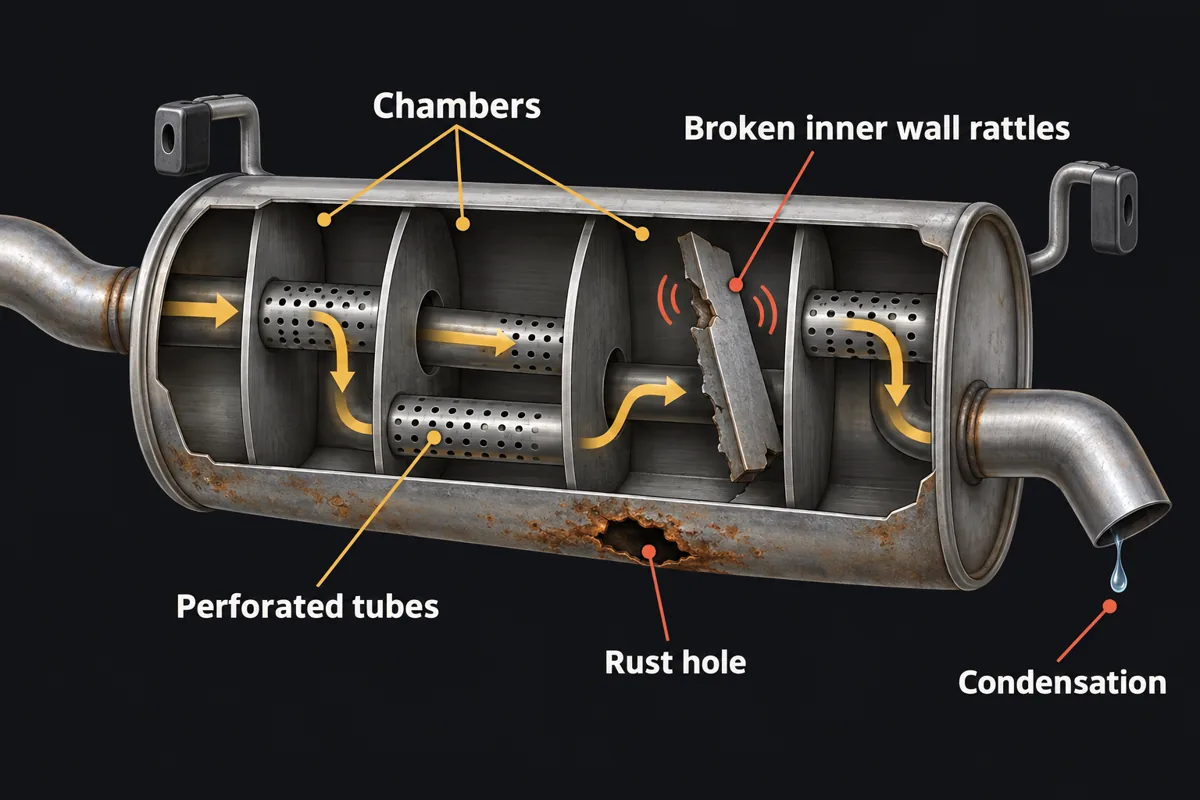
- Engine off and cold. Look along the muffler body and seams for holes, heavy rust and flaking.
- Look at the joints. Black soot at a joint marks an exhaust leak.
- Push the muffler gently. It should move a little on its rubber hangers, not knock or drop.
- Engine running, parked. Listen at the back while someone revs gently. A puff or rasp from one spot marks the hole. Keep your hands away from the tailpipe and hot metal.
Why commuter Civics rust out here
Short trips leave condensation in the exhaust, and the muffler at the back never gets hot enough to dry it out. That water combines with sulfur in the exhaust to form corrosive acids, so the muffler can rust from the inside before you see anything on the outside. Road salt adds to it from the outside.
Do not skip the pipe ahead of the muffler
Check the pipes on both sides of a failed muffler before you replace it. A pipe can look fine on the outside and be badly weakened on the inside. Replacing a muffler onto a rotten pipe means another repair soon after.
Which muffler does your Civic need?
| Your Civic | Honda part | AFECO 54668 fits? |
|---|---|---|
| 2006-2011 sedan, 1.8L | 18307-SNE-A11 or 18307-SNA-A01 | Yes |
| 2006-2011 Civic Hybrid, 1.3L | 18307-SNE-A11 or 18307-SNA-A01 | Yes |
| 2006-2011 2-door coupe | 18307-SVA-A03 | No |
| Civic Si, 2.0L | Different muffler | No |
Enter your VIN in the free NHTSA VIN decoder and confirm Displacement (L) shows 1.8, or 1.3 for the Hybrid.