Upstream vs Downstream Oxygen Sensors: What Each One Does
Reviewed 2026-10-03. Checked against the sources listed below. This is general information, not a substitute for a mechanic's inspection.
Quick answer
The upstream sensor sits before the catalytic converter and measures what comes straight out of the engine. The computer uses it to set the fuel mixture. The downstream sensor sits after the converter and measures what is left after the converter has done its job. The computer compares the two to judge how well the converter works. If both read about the same, the converter is not cleaning the exhaust, and you get P0420 or P0430.
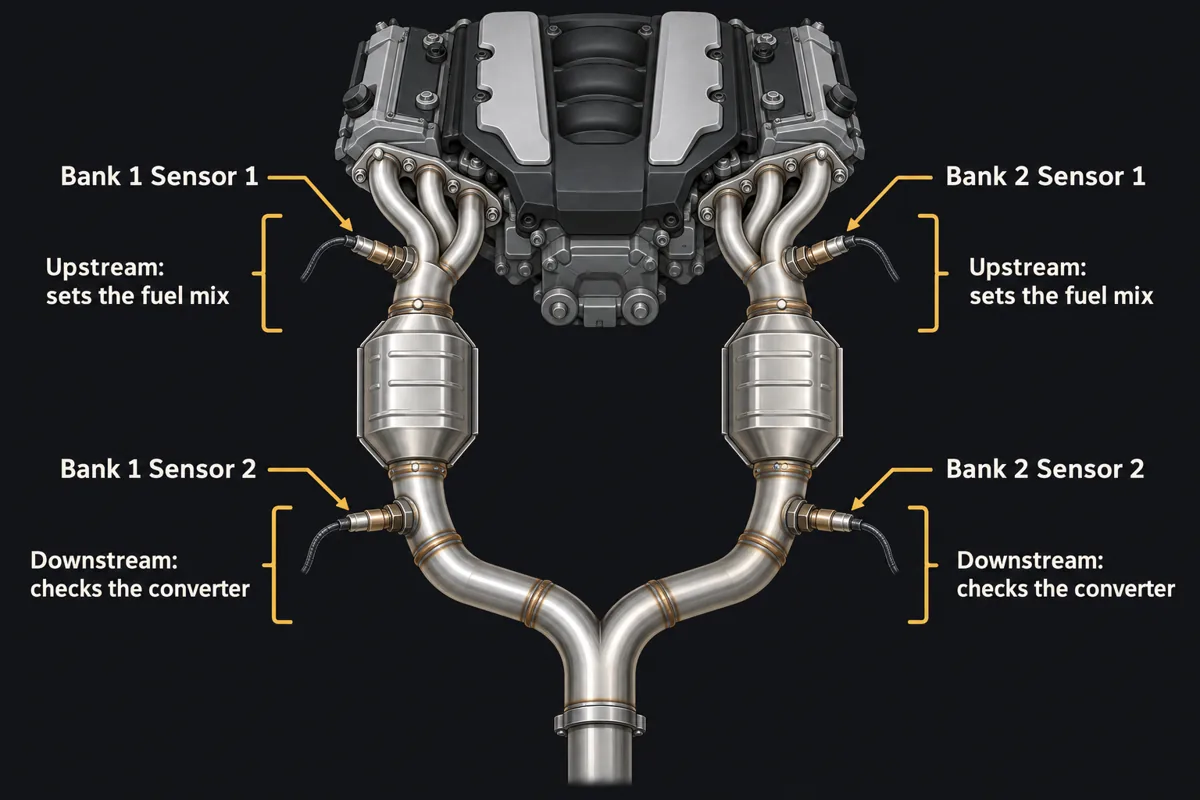
Side by side
| Upstream (sensor 1) | Downstream (sensor 2) | |
|---|---|---|
| Location | Between engine and converter | After the converter |
| Main job | Fuel mixture control | Checking the converter |
| Normal signal | Switches quickly up and down | Fairly steady |
| If it fails | Rough running, poor fuel economy, fuel codes | False or missed catalyst codes |
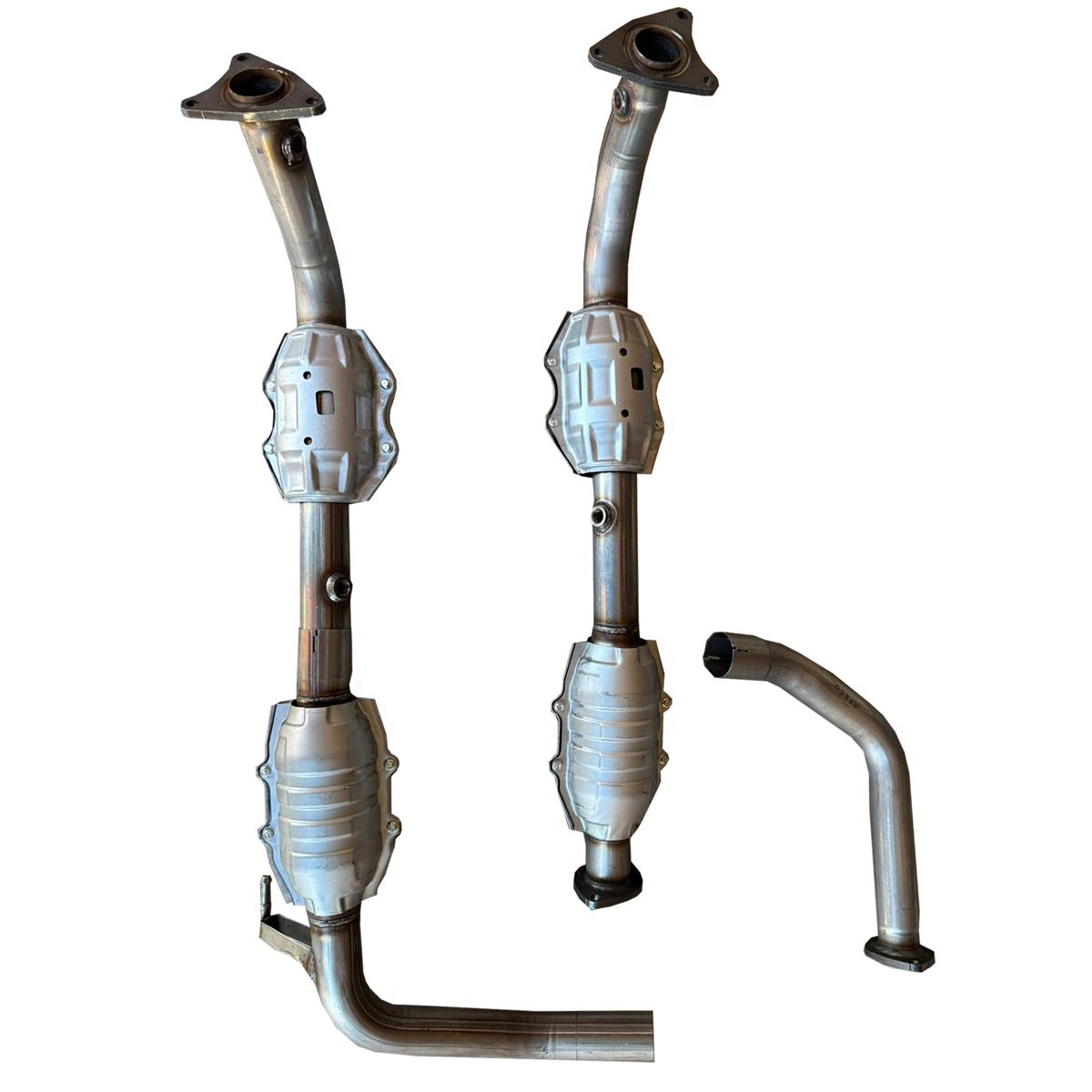
On a V6 or V8 there is one set for each bank, so you may see bank 1 sensor 2 or bank 2 sensor 1 in a code. See our bank 1 vs bank 2 guide.
How the converter is judged
A healthy converter stores and releases oxygen, which smooths out the exhaust. So the upstream sensor switches up and down while the downstream sensor stays fairly steady. Walker Exhaust notes that a downstream reading of about 450 mV or higher typically indicates high converter efficiency. As a converter wears out, the downstream signal starts to copy the upstream signal, and the computer sets a catalyst code.
Things that fool the sensors
- Exhaust leaks: outside air leaking in before a sensor makes it read lean. Even very small leaks can affect readings.
- Worn sensors: NGK notes that sensors deteriorate over time, and other avoidable factors can cause early failure. A slow upstream sensor can make the engine run rich and overheat the converter.
- Contamination: oil or coolant in the exhaust can coat sensors as well as the converter.
Signs a sensor is failing
According to NGK: a check engine light, rough idling or stalling, and reduced fuel economy. Sensor codes such as P0133, P0136 to P0141 and their bank 2 versions point to a specific sensor.
Replacing a converter? Check the sensors too
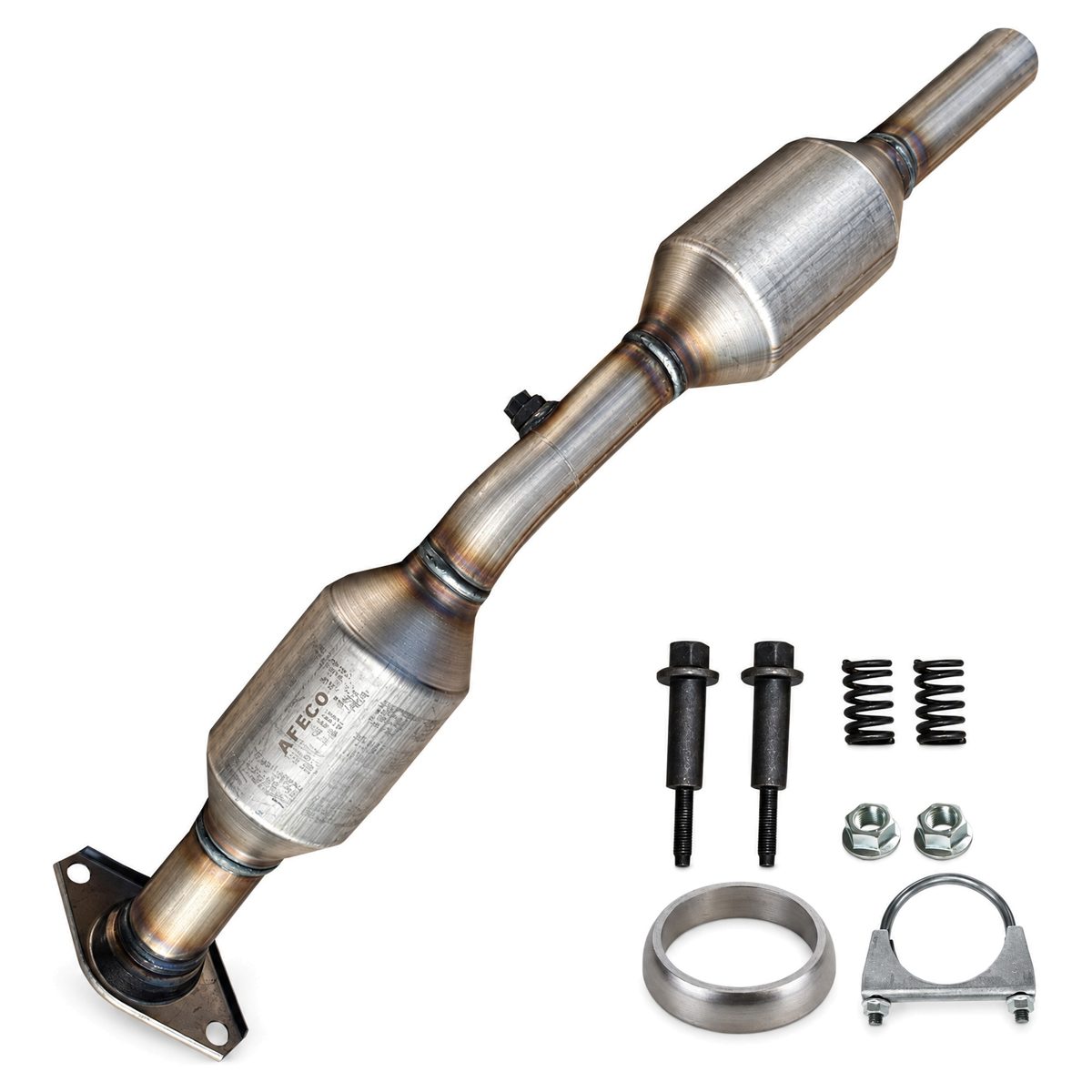
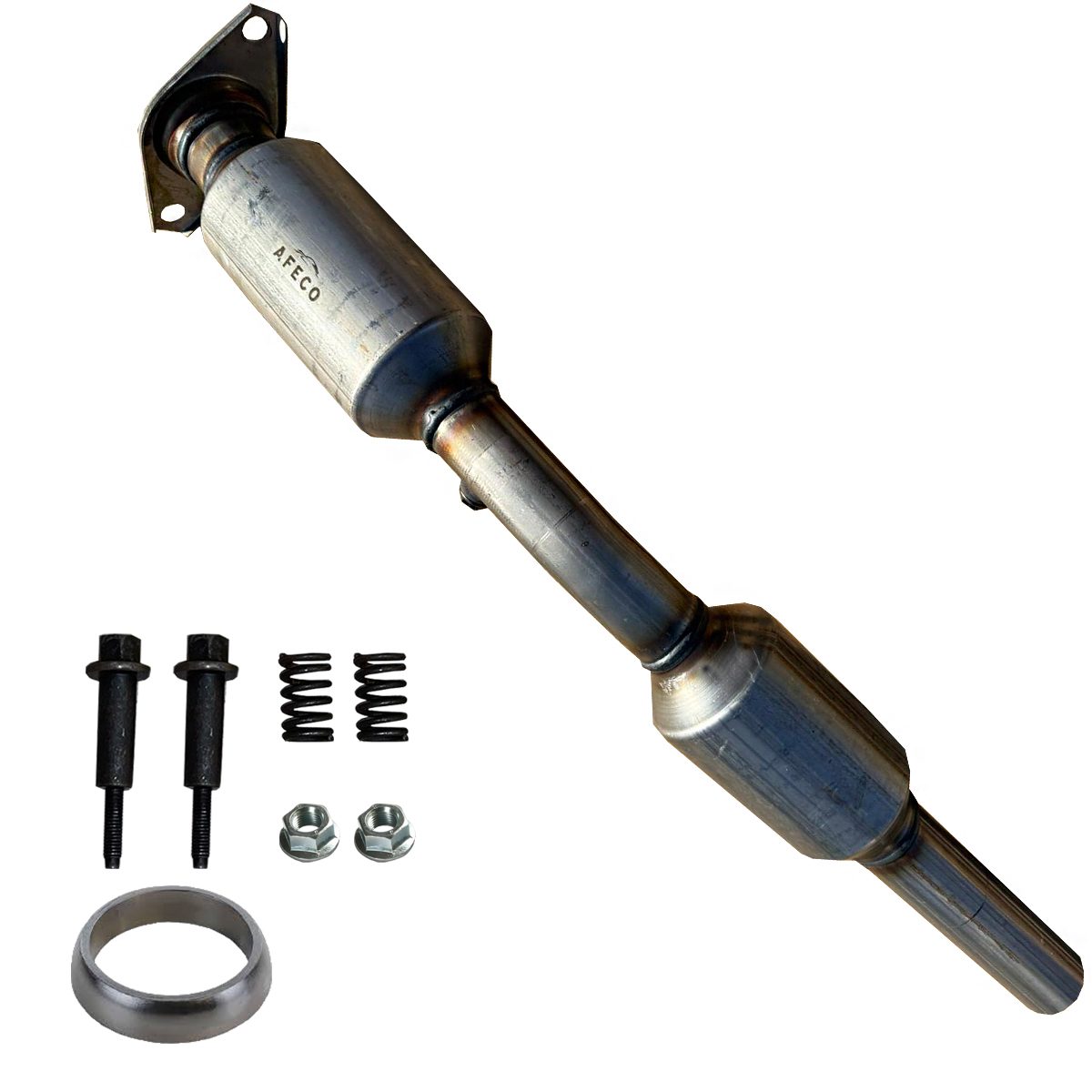
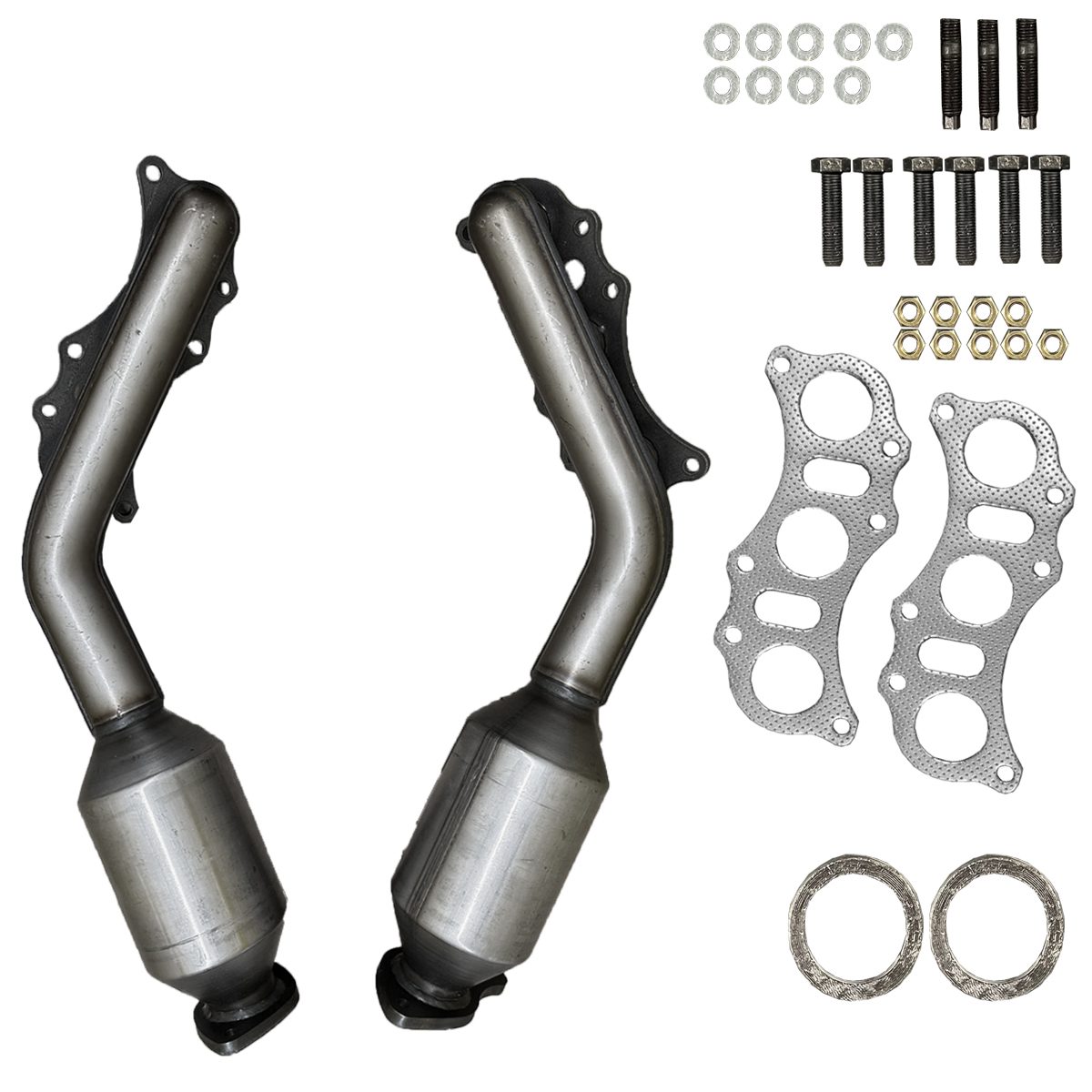
A direct-fit converter keeps the sensor ports in the factory positions so the readings stay correct. On high-mileage vehicles, a worn sensor can make a new converter look bad to the computer, so test the sensors when you replace the converter.