Exhaust Ticking Noise When Cold That Goes Away When Warm
Reviewed 2026-10-03. Checked against the sources listed below. This is general information, not a substitute for a mechanic's inspection.
Quick answer
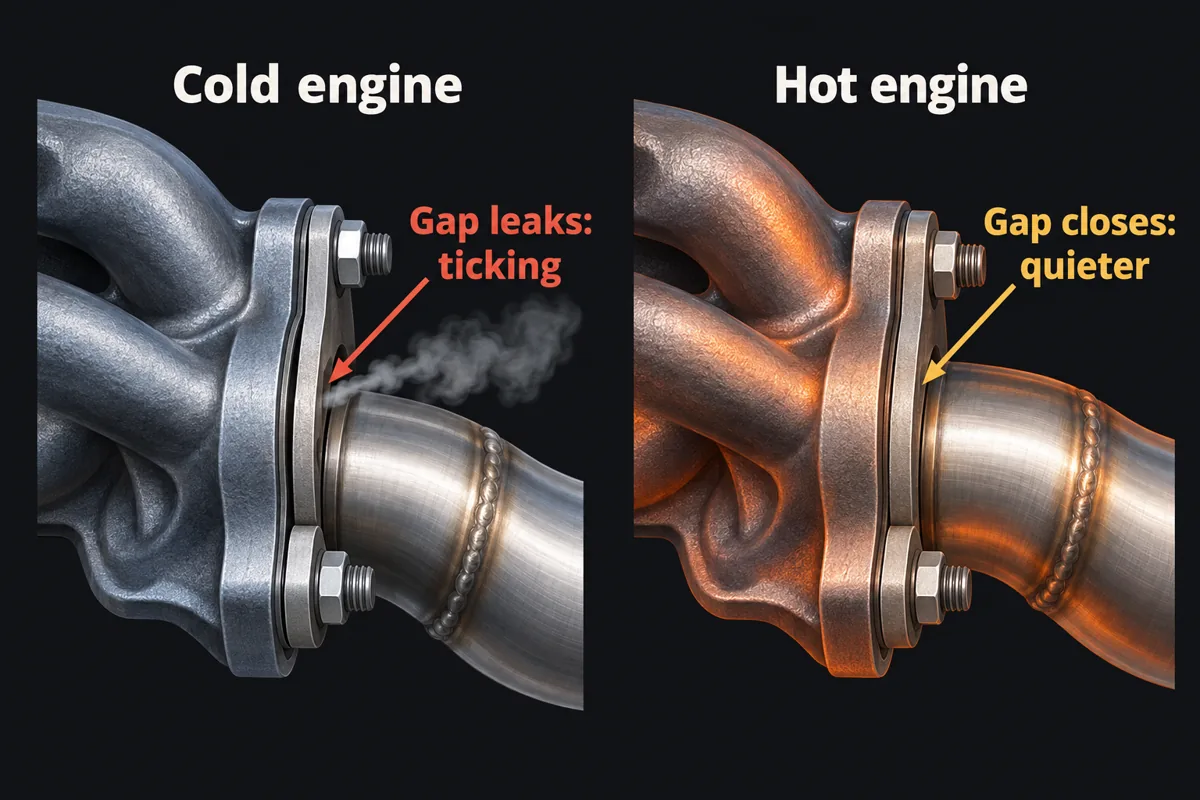
A ticking or puffing sound near the engine that is loudest on a cold start and fades after a few minutes is very often a small exhaust leak at the manifold, at the manifold gasket, or at the joint right after it. Metal expands as it heats up, which can close a small gap, so the noise fades. The leak is still there, and it can still affect oxygen sensor readings.
Why it ticks cold and quiets warm
The exhaust manifold goes from outdoor temperature to very hot every time you drive. Over years of heating and cooling, gaskets flatten, studs stretch or snap, and manifolds can crack. When everything is cold, a small gap lets exhaust pulse out with each cylinder firing, which sounds like a tick. As the parts heat up and expand, the gap gets smaller and the sound fades.
Exhaust tick or engine tick?
| Clue | Points to exhaust leak | Points to engine (valvetrain) |
|---|---|---|
| Changes as engine warms | Usually fades | May stay the same or get louder |
| Where it seems to come from | Side of the engine where the manifold is | Top of the engine |
| Soot marks | Black soot near a gasket, flange or stud | None |
| Smell | Exhaust smell in the engine bay | None |
Why it matters even if it goes quiet
- Sensor readings: Walker Exhaust notes that even very small leaks can badly affect the accuracy of oxygen and air-fuel sensor readings. A leak before an oxygen sensor can lead to fuel trim codes or a catalyst code.
- Fumes: many exhaust gases have no smell. A leak near the front of the car can let fumes reach the cabin.
- It gets worse: the heat cycles that made the gap keep working on it.
How to check
- Listen with the engine cold, right after starting, and note which side the tick comes from.
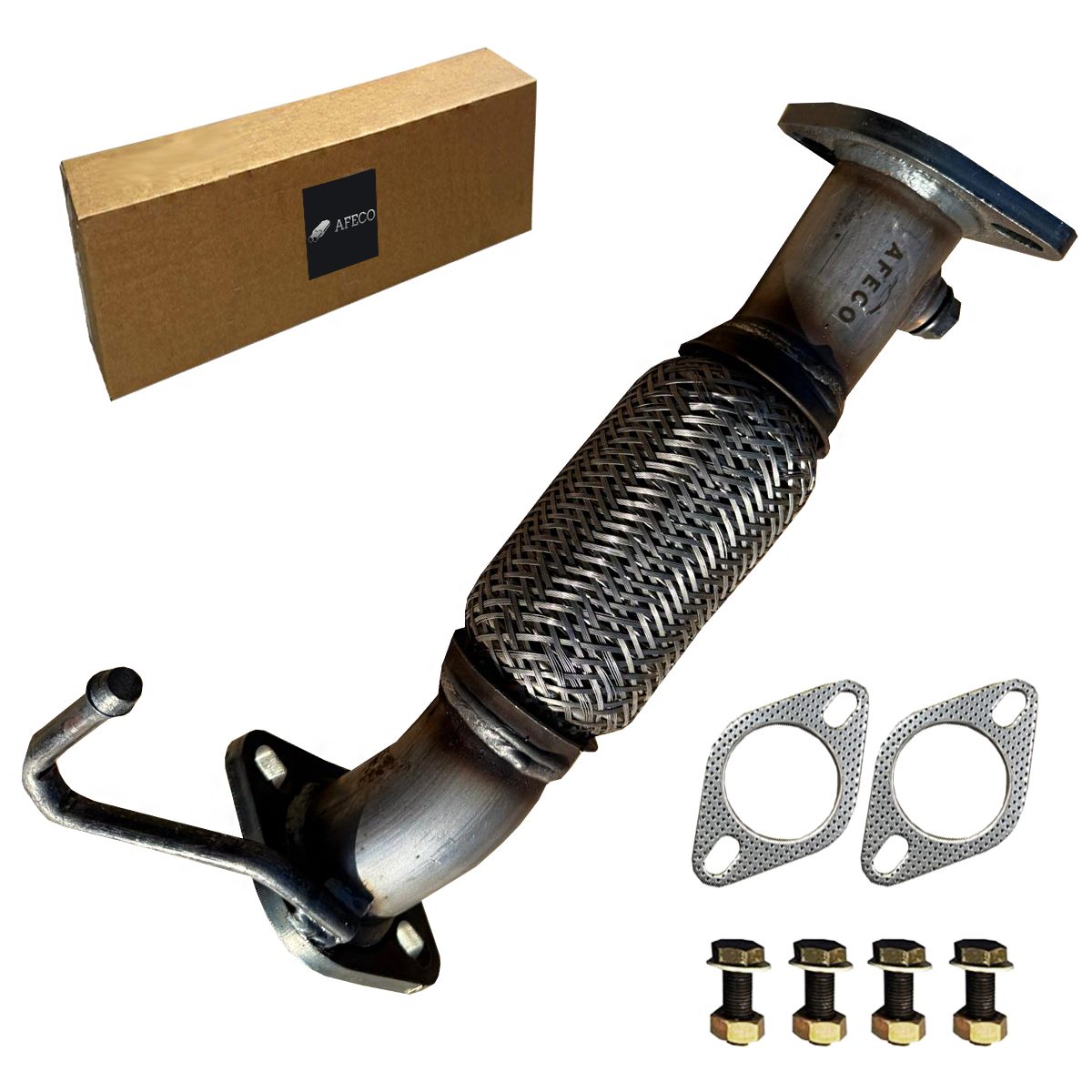
- With the engine off and cool, look for black soot streaks at the manifold, the manifold to pipe flange, and the flex pipe.
- Check for broken or missing studs and bolts at the manifold flange.
- A shop can use a smoke machine to find small leaks, inspecting once cold and again when warm.
Repair options
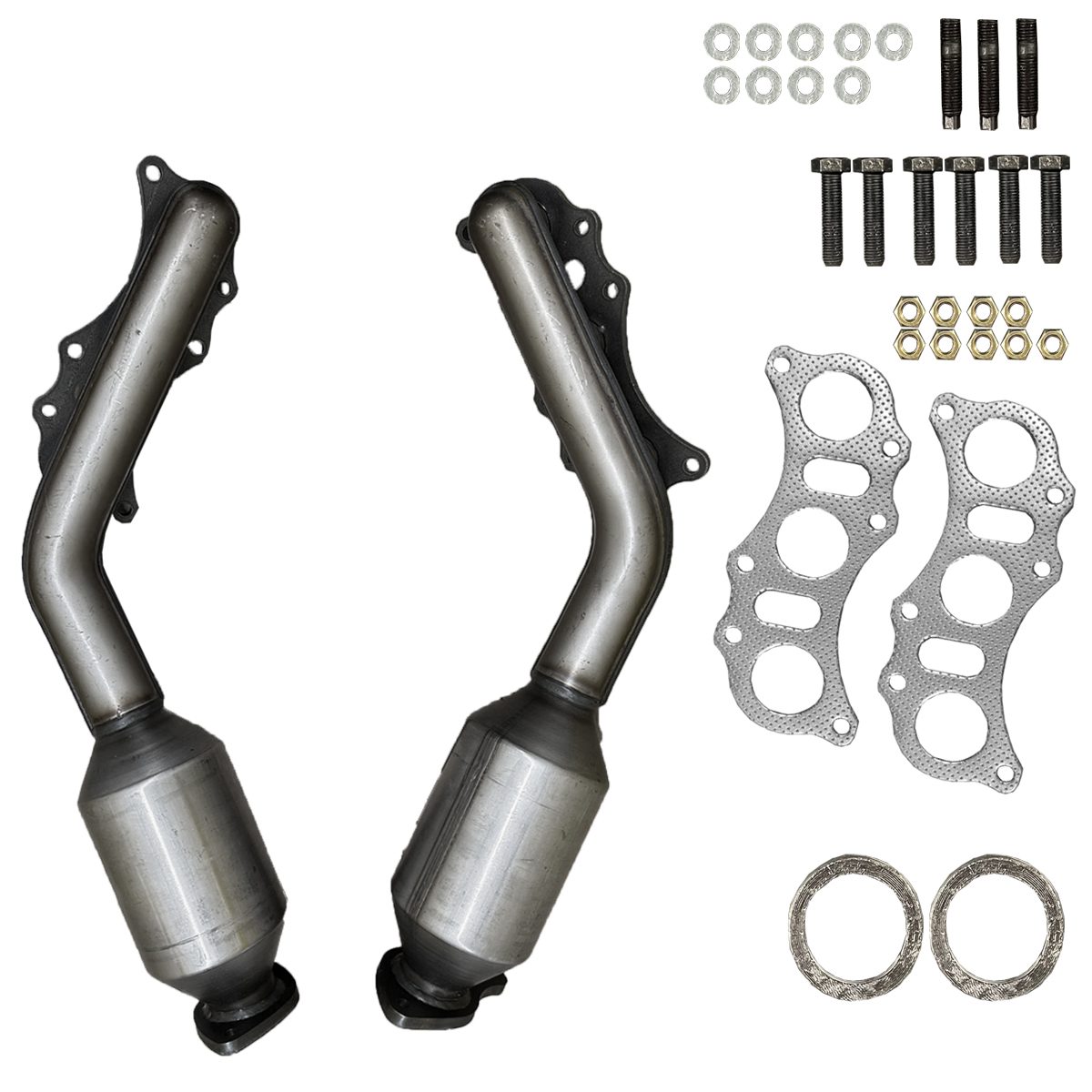
A leaking gasket or a broken stud can sometimes be fixed on its own. If the manifold or a manifold-mounted converter is cracked, the part needs replacing. On some engines, such as the Toyota 4.0L V6 in the 4Runner, Tacoma and FJ Cruiser, the catalytic converter is built into the exhaust manifold, so a crack there means replacing the manifold converter. Always use new gaskets and hardware.