Direct-Fit vs Universal Catalytic Converter: Which Should You Buy?
Reviewed 2026-10-03. Checked against the sources listed below. This is general information, not a substitute for a mechanic's inspection.
Quick answer
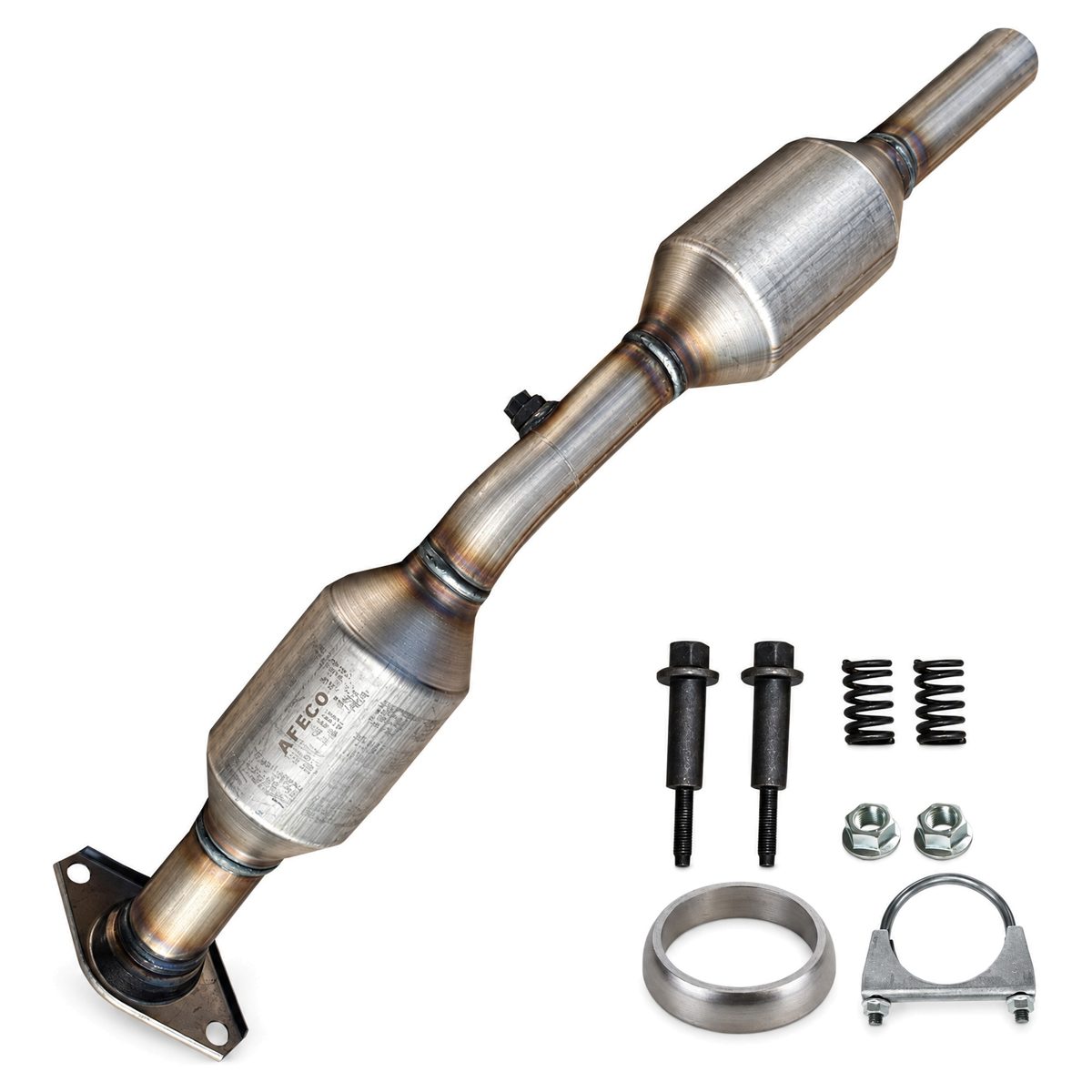
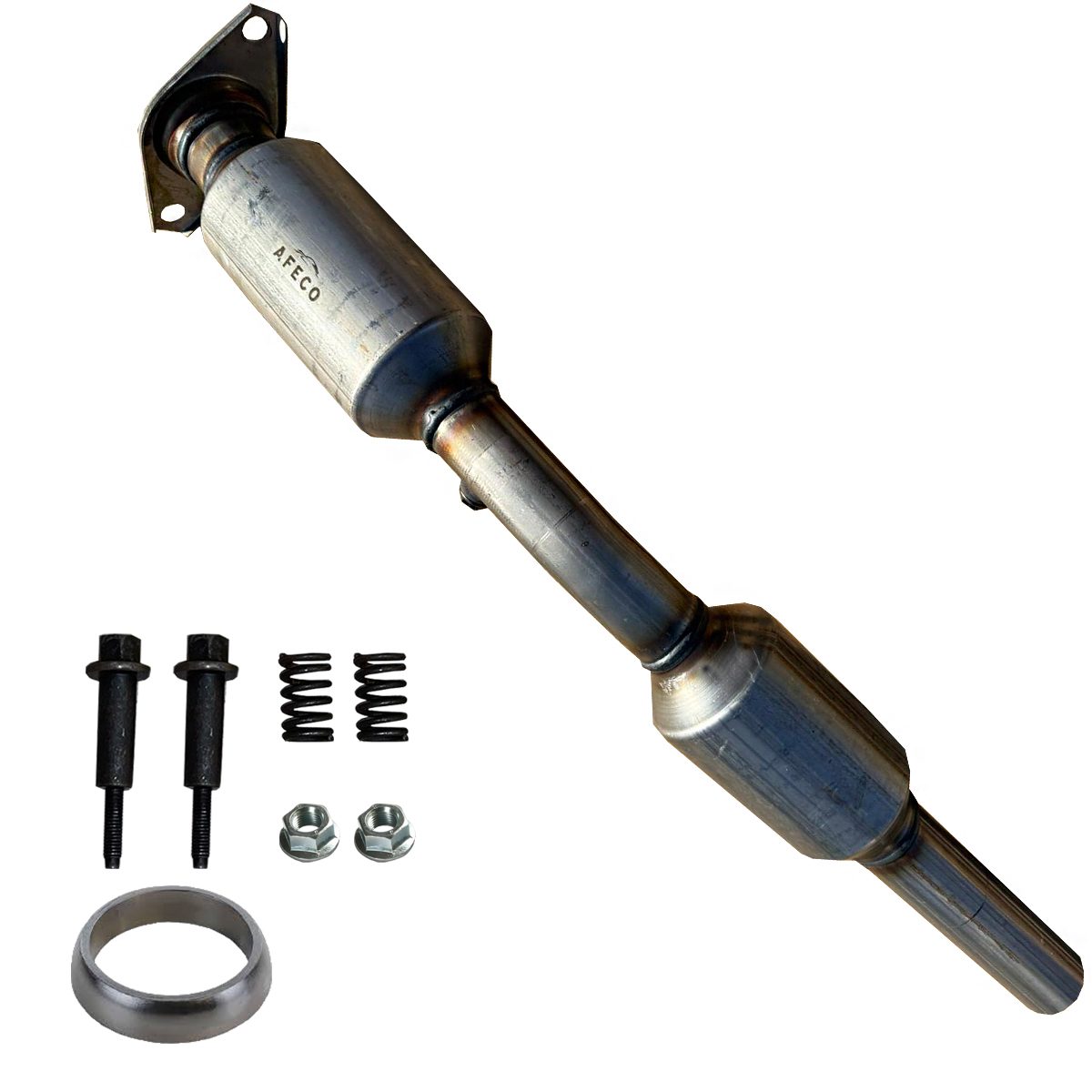
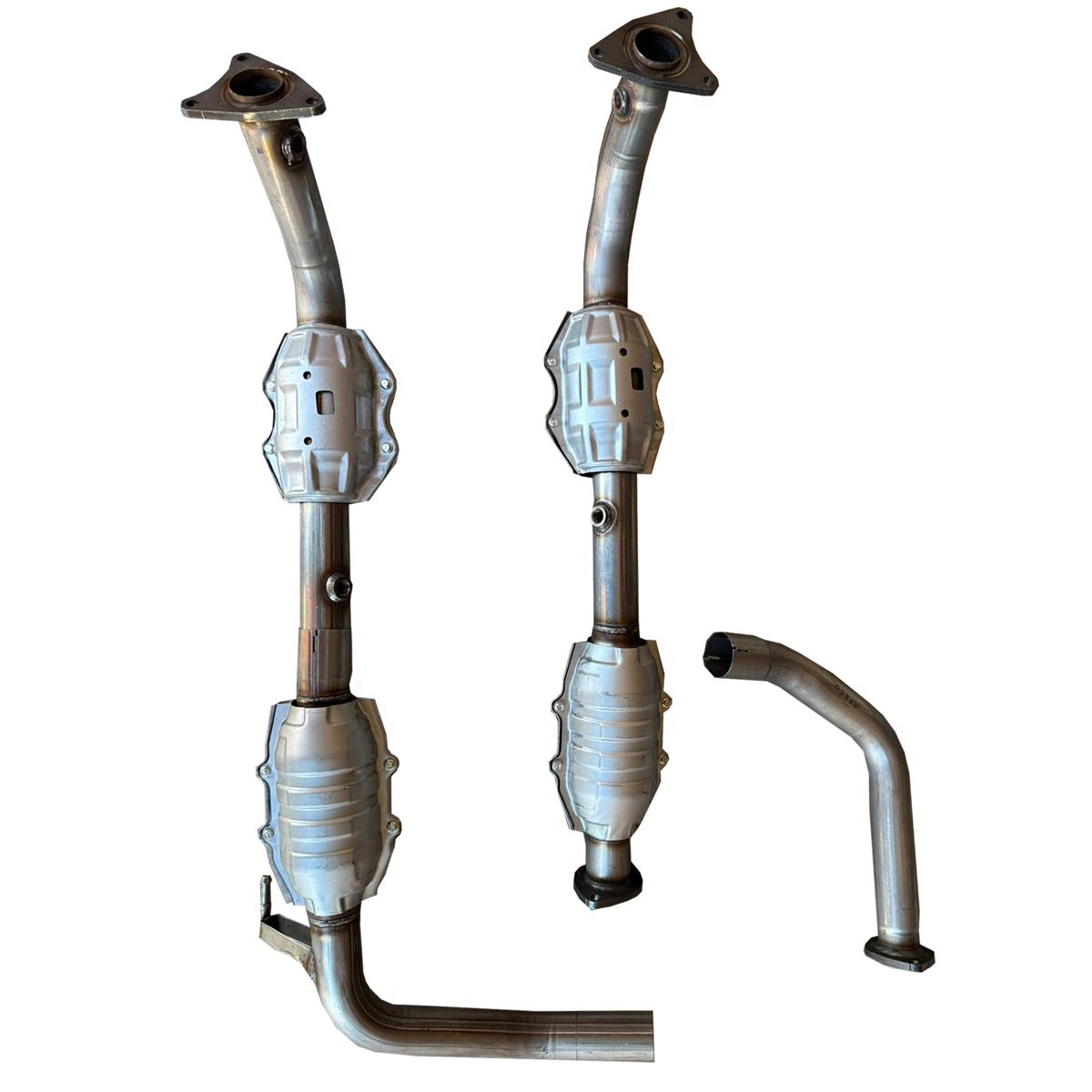
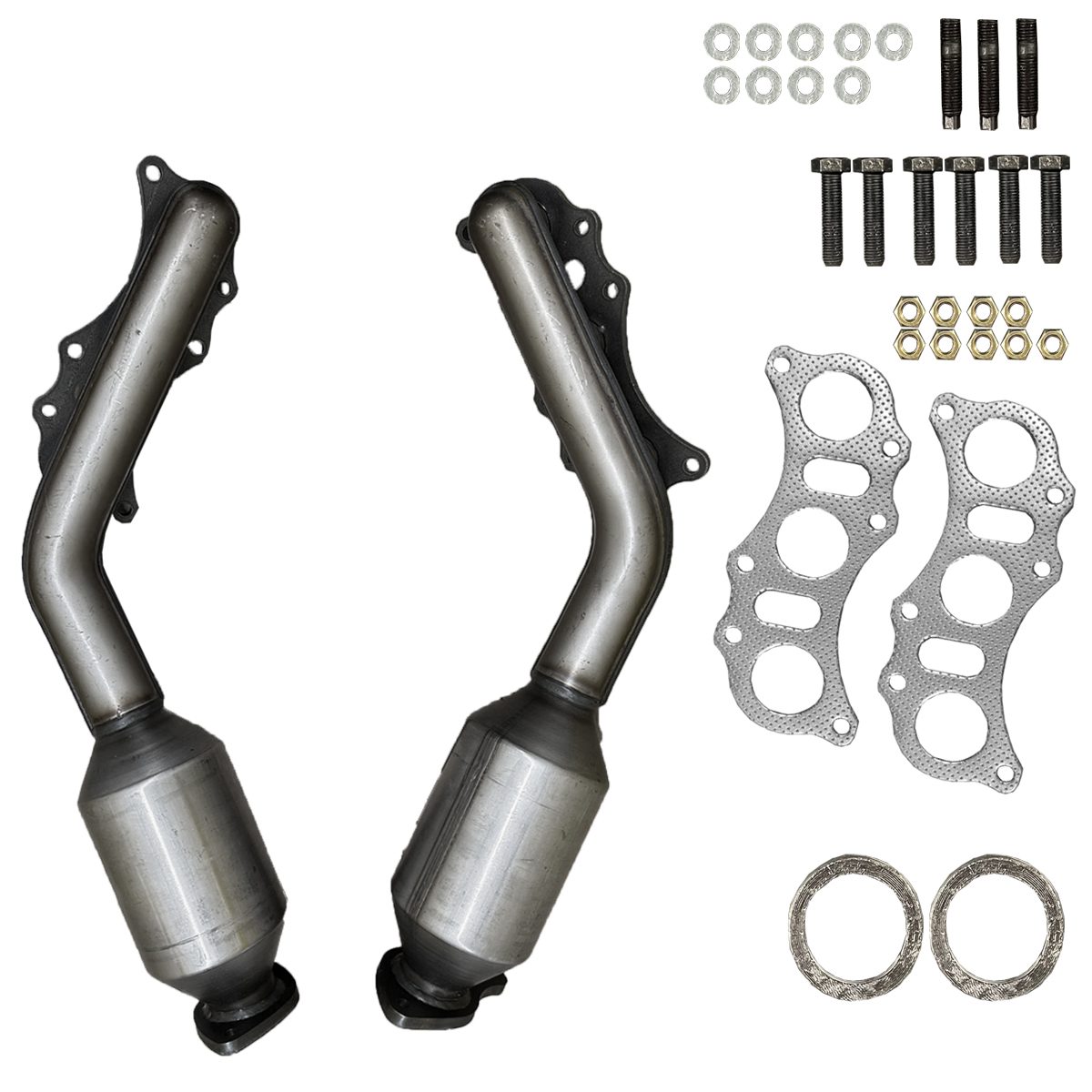
A direct-fit converter is shaped like the original part, with the same flanges, pipe bends and sensor ports, so it bolts into place. A universal converter is a converter body with plain pipe ends that a shop cuts and welds into your existing pipes. Direct-fit usually costs more for the part but less in labour and guesswork. Universal can make sense for a shop with welding equipment and a common pipe size.
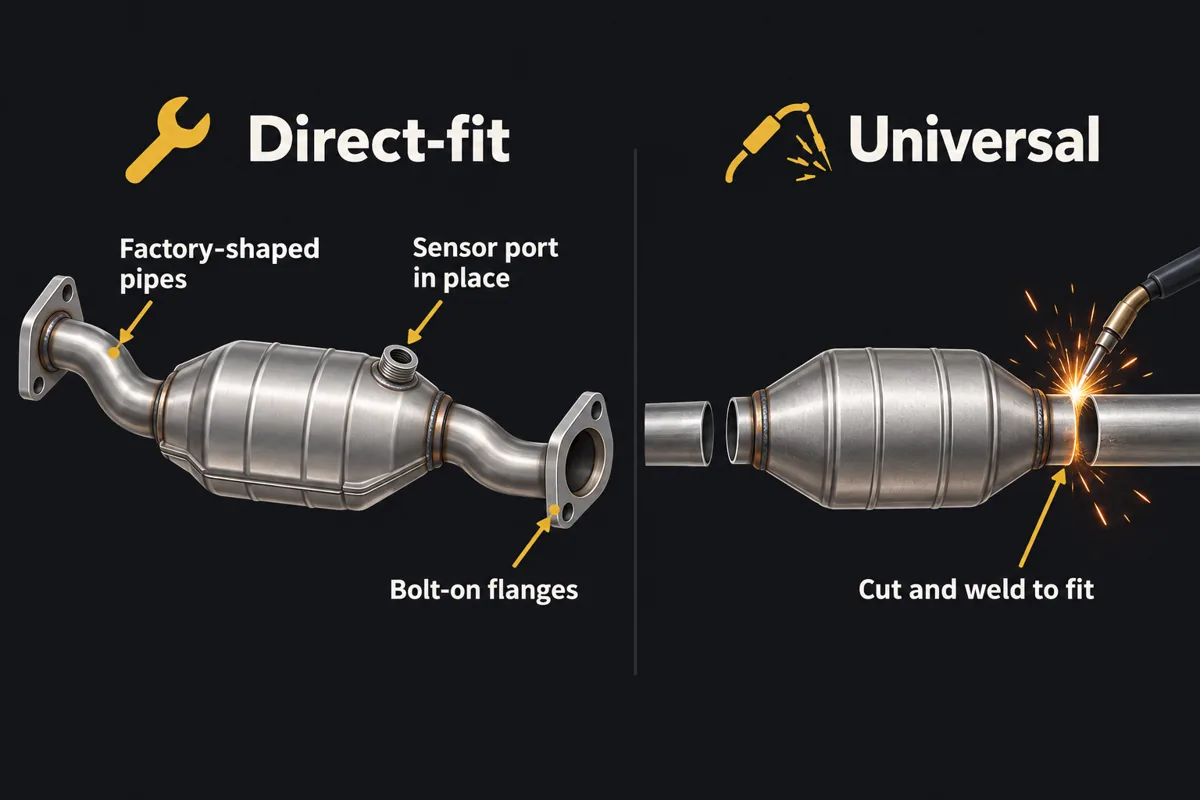
Side-by-side
| Direct-fit | Universal | |
|---|---|---|
| Installation | Bolts to the original mounting points | Cut out the old converter, weld the new one in |
| Tools needed | Hand tools, penetrating oil, jack stands | Cutting and welding equipment |
| Fit | Made for specific years, models and engines | Fits many vehicles if pipe size matches |
| Sensor ports | In the original positions | Must be added or matched by the installer |
| Labour time | Usually shorter | Usually longer |
| Risk of leaks | Low if gaskets and bolts are new | Depends on weld quality |
| Best for | DIY and most shops | Welding shops, uncommon vehicles |
How to decide
- Do you or your shop weld? If not, direct-fit is the practical choice.
- Is there a direct-fit part for your exact engine? If yes, it is usually the cleanest repair.
- Total cost, not part price. A cheaper universal converter plus welding labour can cost more than a direct-fit part.
- Sensor positions matter. The downstream oxygen sensor must sit where the computer expects, or the catalyst test can fail.
The rules still apply either way
The EPA's aftermarket converter policy sets out when an aftermarket converter can be installed, for example when the original is missing or has been found to need replacement, and requires installers to keep records. California and some other states require converters approved by the California Air Resources Board. Check the rules where your vehicle is registered before buying.
Related AFECO parts
Direct-fit converters listed for the exact vehicles on each page.