How to Test for a Clogged Catalytic Converter
Reviewed 2026-10-03. Checked against the sources listed below. This is general information, not a substitute for a mechanic's inspection.
Quick answer
A clogged converter acts like a cork in the exhaust. Common signs are a loss of power, especially going uphill or at highway speed, worse fuel economy, and in bad cases stalling or rough idle soon after starting. Shops confirm it with a backpressure test or an intake vacuum test rather than guessing.
How converters get clogged
According to Walker Exhaust, the usual reasons are:
- Melted substrate: unburned fuel from misfires or a rich mixture burns inside the converter, the temperature soars, and the honeycomb melts into a solid lump.
- Debris: pieces from a broken converter upstream can block a converter further back.
- Shifted brick: if the support mat around the honeycomb fails, the brick can move and block flow.
Symptoms
- Engine feels weak, especially uphill or when passing
- Fuel economy drops
- Rough idle or stalling right after starting, in severe cases
- Rattle inside the converter (broken pieces)
- Converter or heat shields look heat-discoloured
- Codes such as P0420 or P0430, or misfire codes that caused the damage
The tests shops use
| Test | How it works | What the sources say |
|---|---|---|
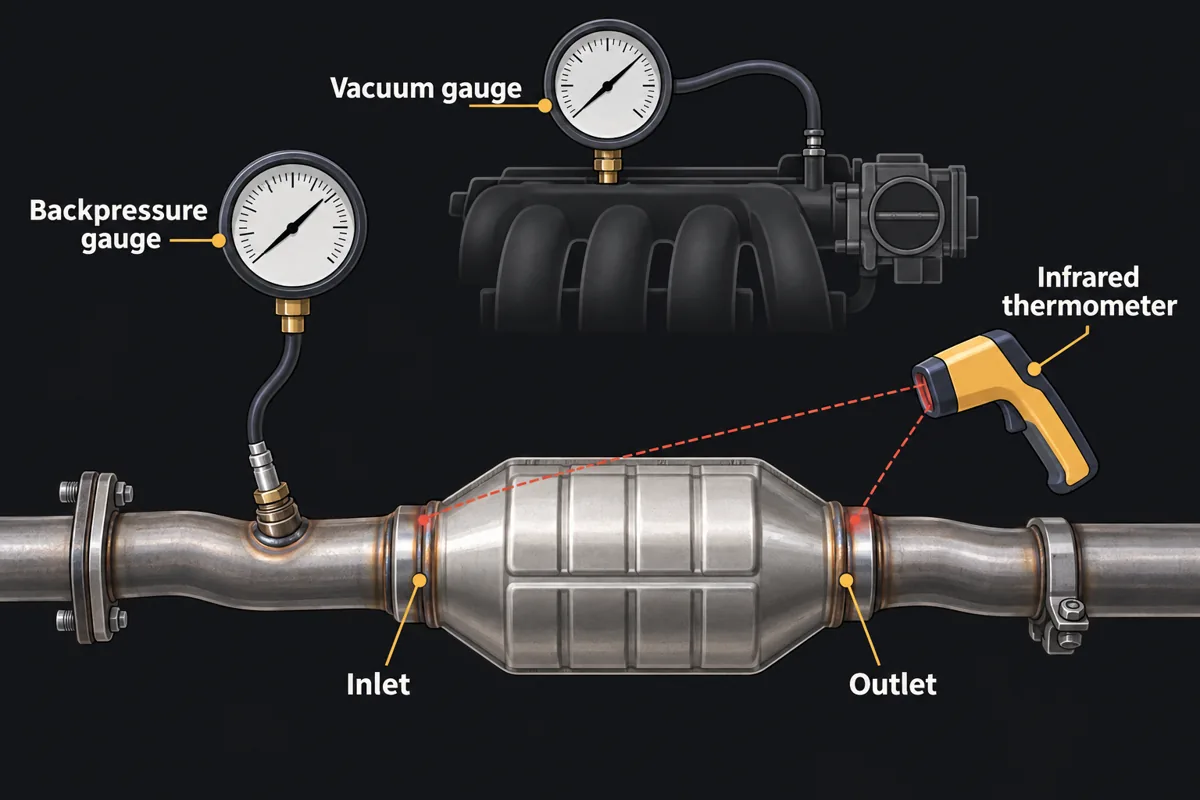
| Backpressure | A gauge is fitted in an oxygen sensor port ahead of the converter | AA1Car: near zero at idle and no more than 1.25 psi at 2,500 rpm. Walker: under 1.5 psi at idle and under 3 psi at 2,000 rpm |
| Intake vacuum | A vacuum gauge watches engine vacuum at idle and higher rpm | AA1Car: normal idle vacuum is about 18 to 22 inches Hg; a reading about 10 percent low can mean exhaust buildup |
| Temperature | An infrared thermometer compares the inlet and outlet | Walker: a working converter's outlet runs hotter than the inlet, up to about 150 F hotter |
| Tap test | A rubber mallet taps the shell with the engine off and cold | Loose pieces inside mean a broken substrate |
The two sources give slightly different backpressure limits, so treat them as rough guides and go by the vehicle's service information.
Before you replace it
A converter clogs because something upstream damaged it. Walker recommends checking for other engine codes, exhaust leaks, oxygen sensor condition, the cooling system, the fuel system and fuel trims before replacing the converter. Skipping this is the most common reason a new converter fails early.
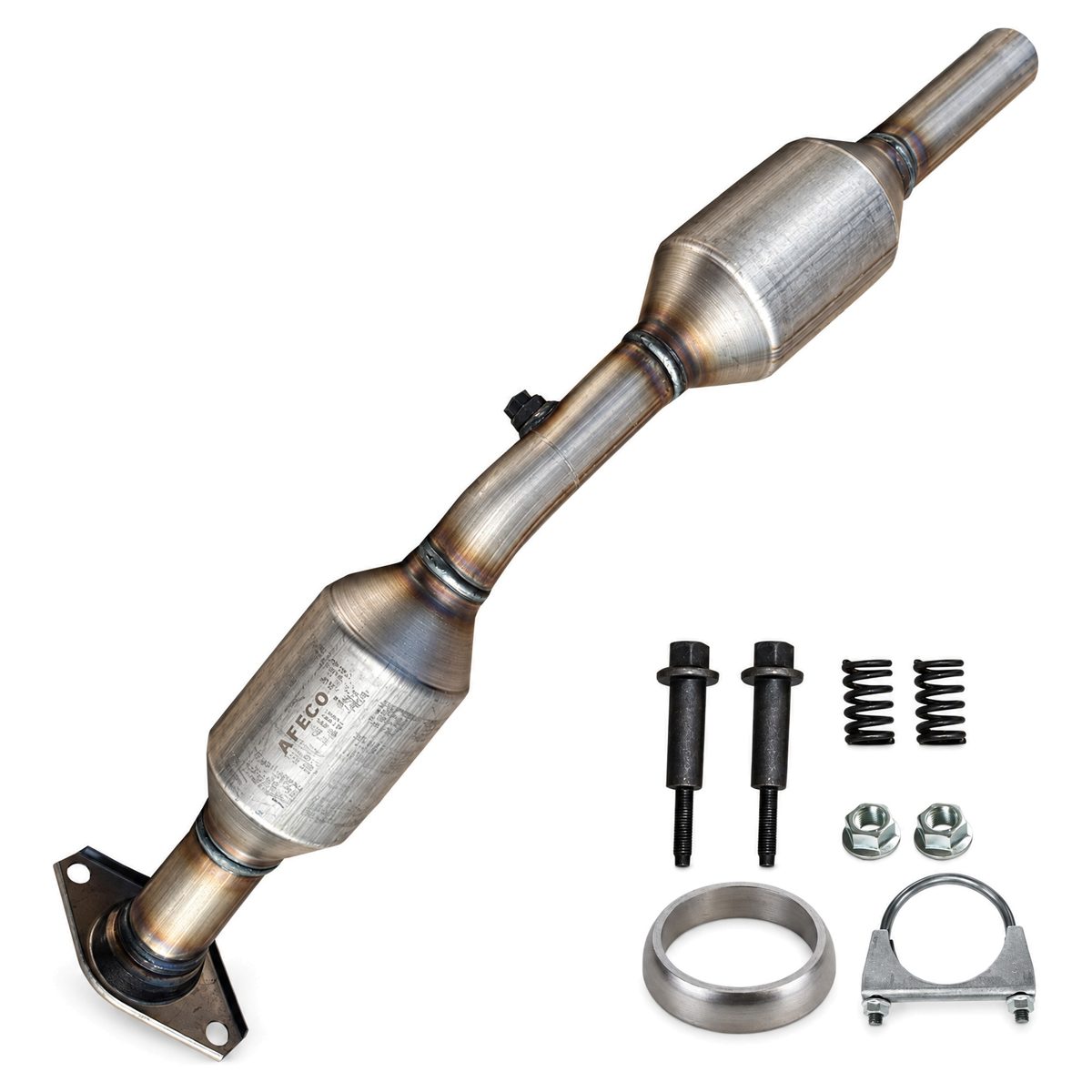
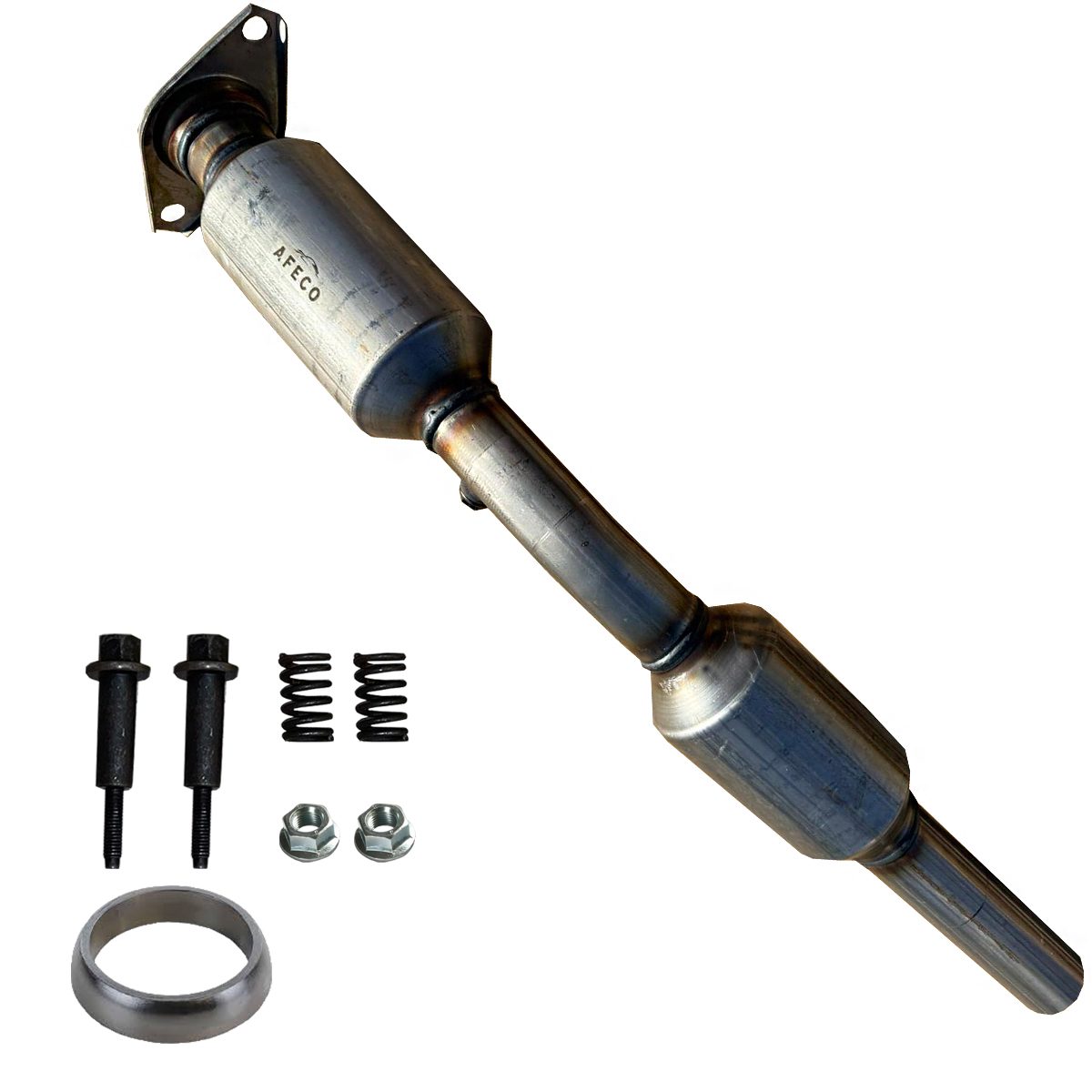
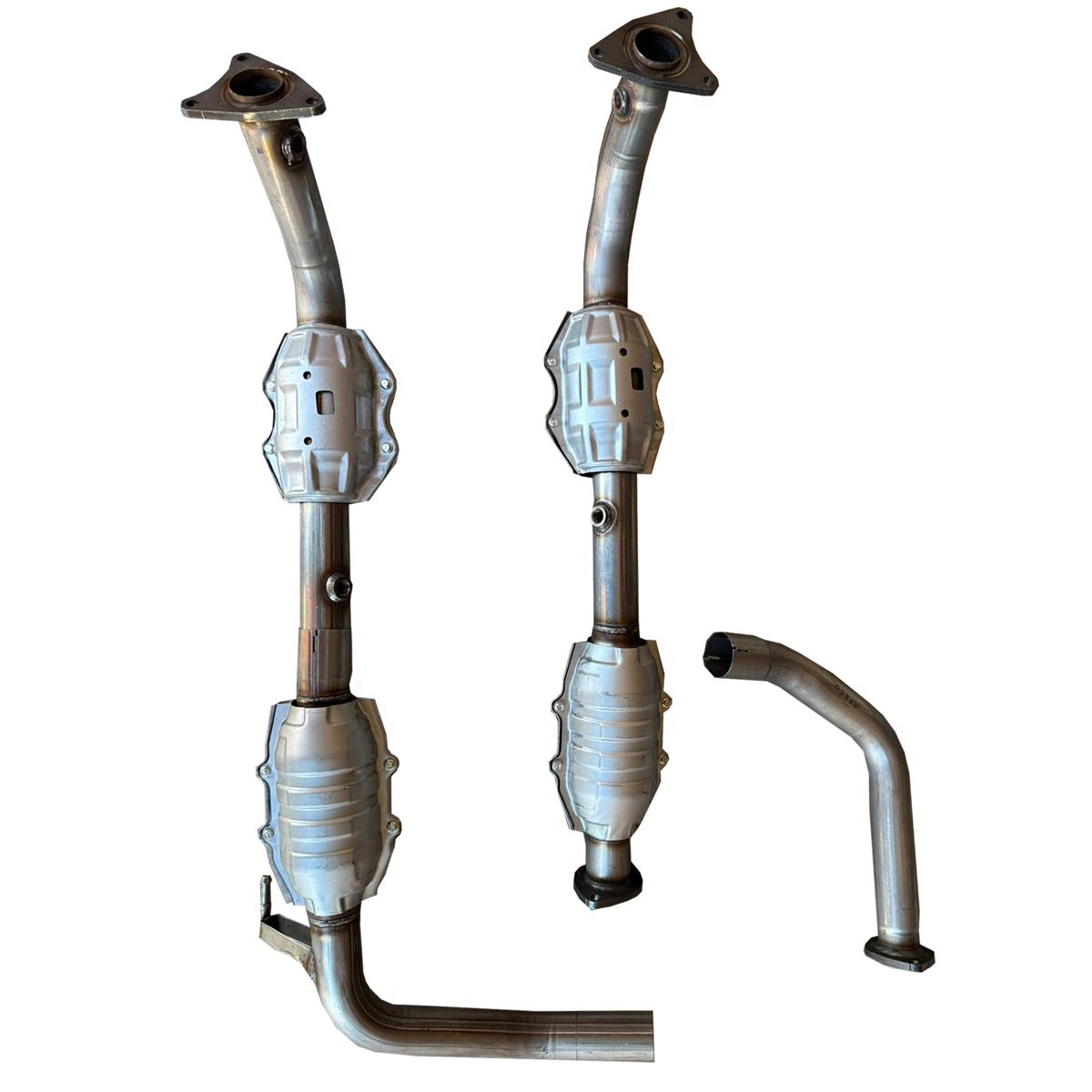
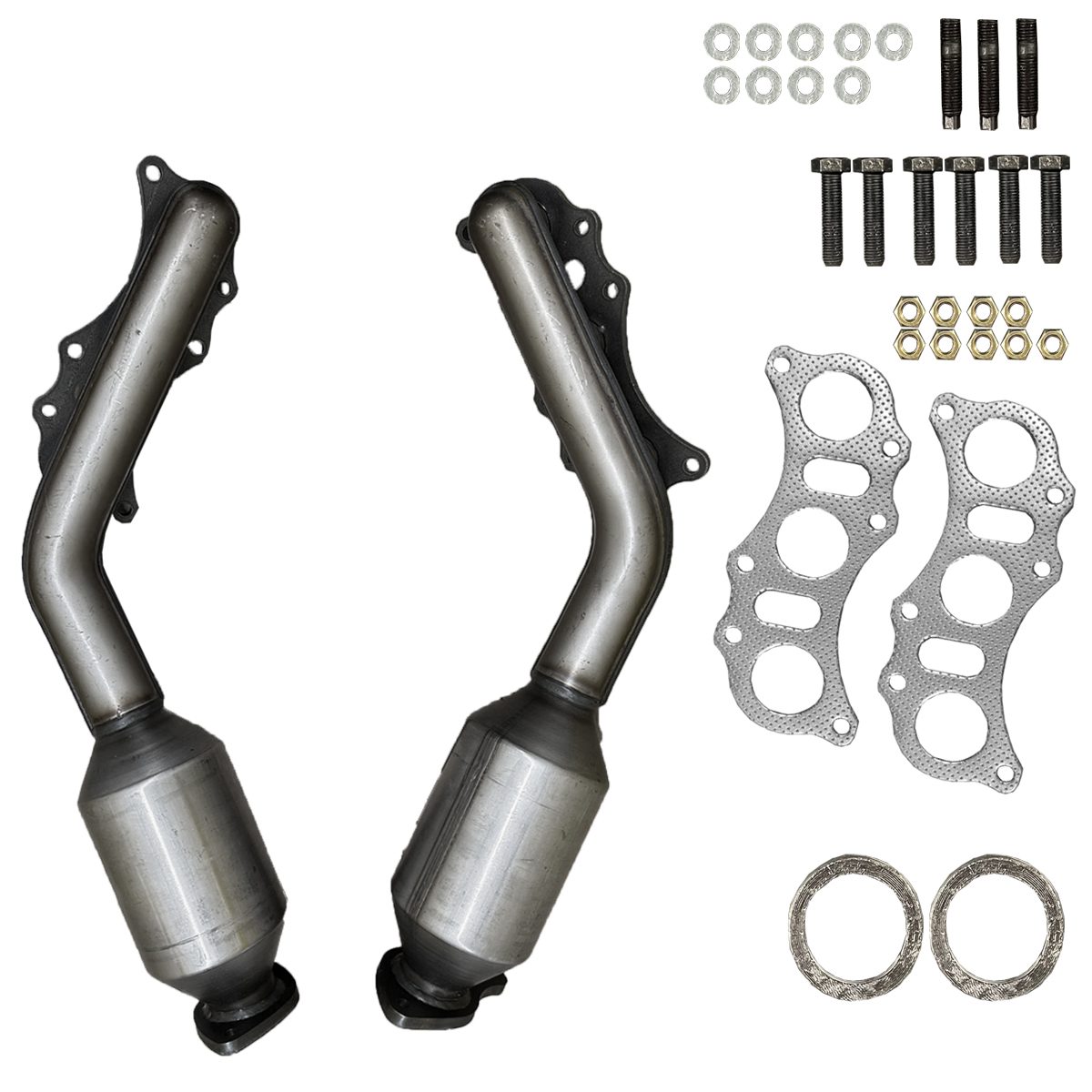
Related AFECO parts
Direct-fit converters listed for the exact vehicles on each page.