Bad Catalytic Converter Symptoms: 7 Signs, What Else Causes Them, and How to Tell
Reviewed 2026-10-03. Checked against the sources listed below. This is general information, not a substitute for a mechanic's inspection.
Quick answer
A failing catalytic converter usually shows up as a check engine light with P0420 or P0430, a failed emissions test, a rotten egg smell, or a rattle from under the car. A badly clogged converter can also cause loss of power. Several of these signs have other causes, so it pays to rule those out first.
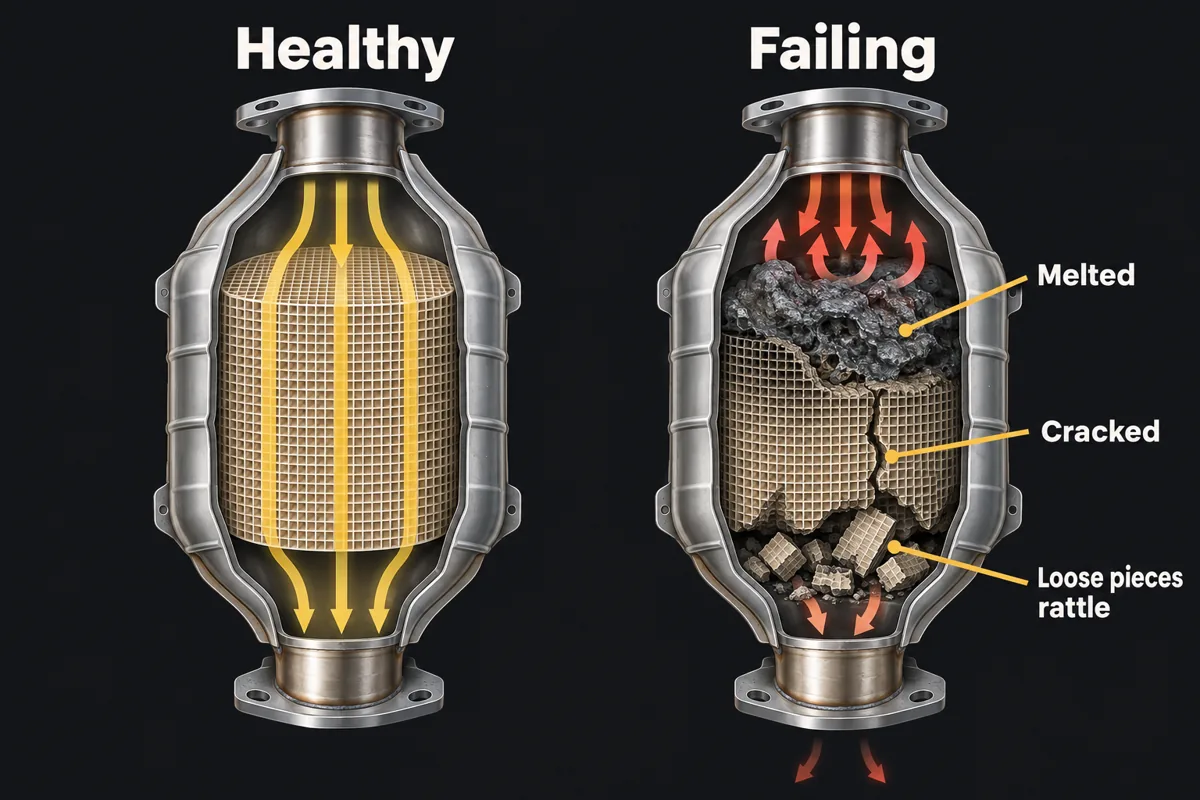
The 7 signs, and what else could cause each one
| Sign | Why a bad converter causes it | Other common causes |
|---|---|---|
| Check engine light, P0420 or P0430 | The sensor after the converter sees too little change | Exhaust leak, oxygen sensor, misfire |
| Failed emissions test | The converter no longer cleans the exhaust enough | Misfire, rich fuel mixture, vacuum leak |
| Rotten egg (sulfur) smell | An overloaded or damaged converter does not process sulfur compounds well | Running rich, fuel quality |
| Rattle under the car, worse at startup | The ceramic core inside has broken apart | Loose heat shield, broken hanger |
| Loss of power, worse uphill | A clogged core blocks the exhaust | Ignition, fuel or air intake problems |
| Poor fuel economy | A blocked exhaust makes the engine work harder | Tire pressure, sensors, driving habits |
| Converter very hot or glowing | Unburned fuel is burning inside it | Misfire (fix this immediately) |
A simple order of checks
- Scan for codes. Note every code, not just P0420. Misfire and fuel trim codes change the diagnosis.
- Tap test for rattle. With the engine cold and off, gently tap the converter shell with a rubber mallet. A loose rattle inside usually means a broken core. A rattle from the outer shield is usually just the heat shield.
- Look for leaks in front of the downstream oxygen sensor. Leaks can fake a bad converter reading.
- Have a shop check backpressure or temperature if you suspect a clog. A clogged converter often runs much hotter at its inlet than its outlet.
- Fix the cause (misfire, oil or coolant burning) before fitting a new converter.
Why converters fail
Converters do not wear out quickly on a healthy engine. They usually fail because something upstream damaged them: misfires overheating the core, oil or coolant contaminating it, physical impact from road debris, or simply very high mileage.
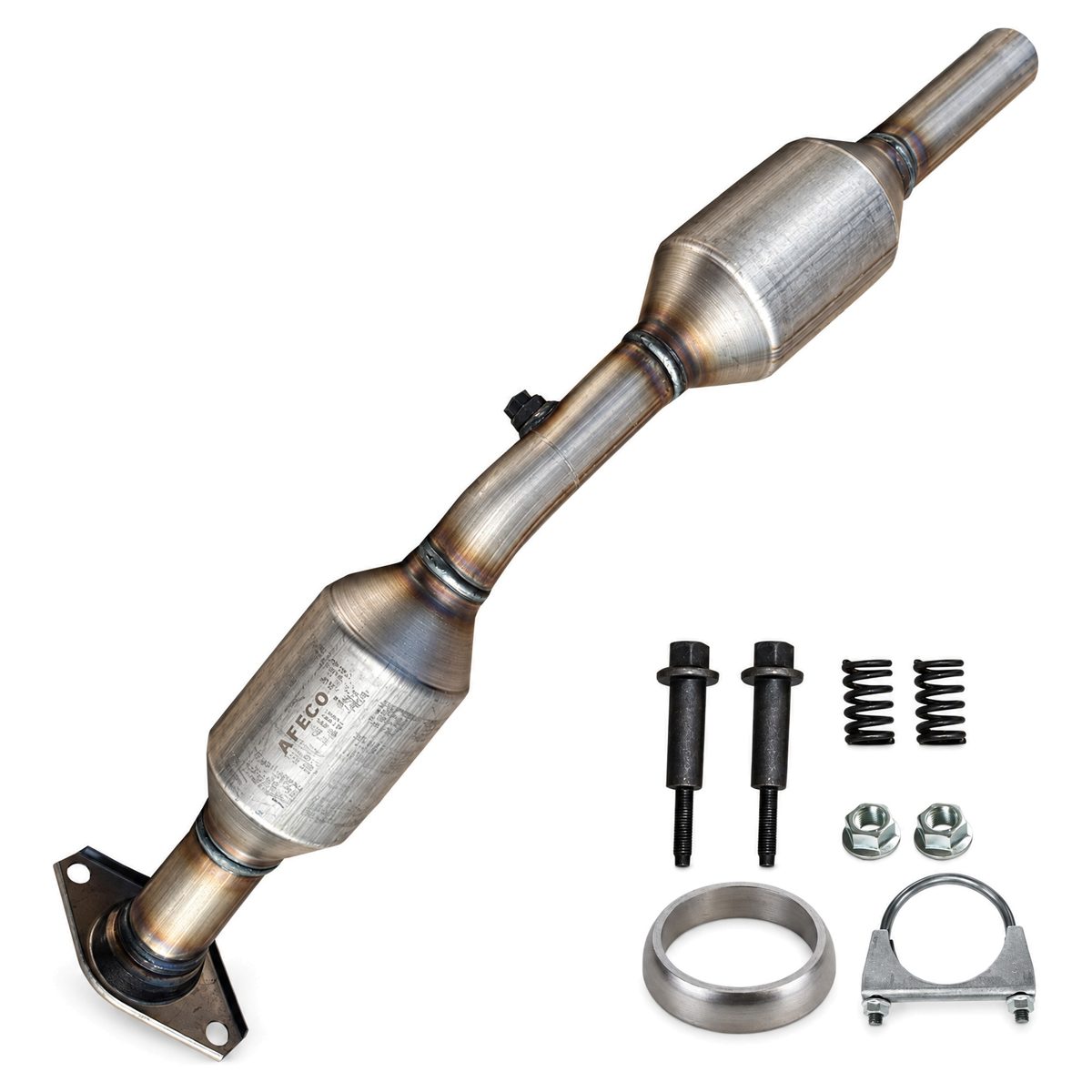
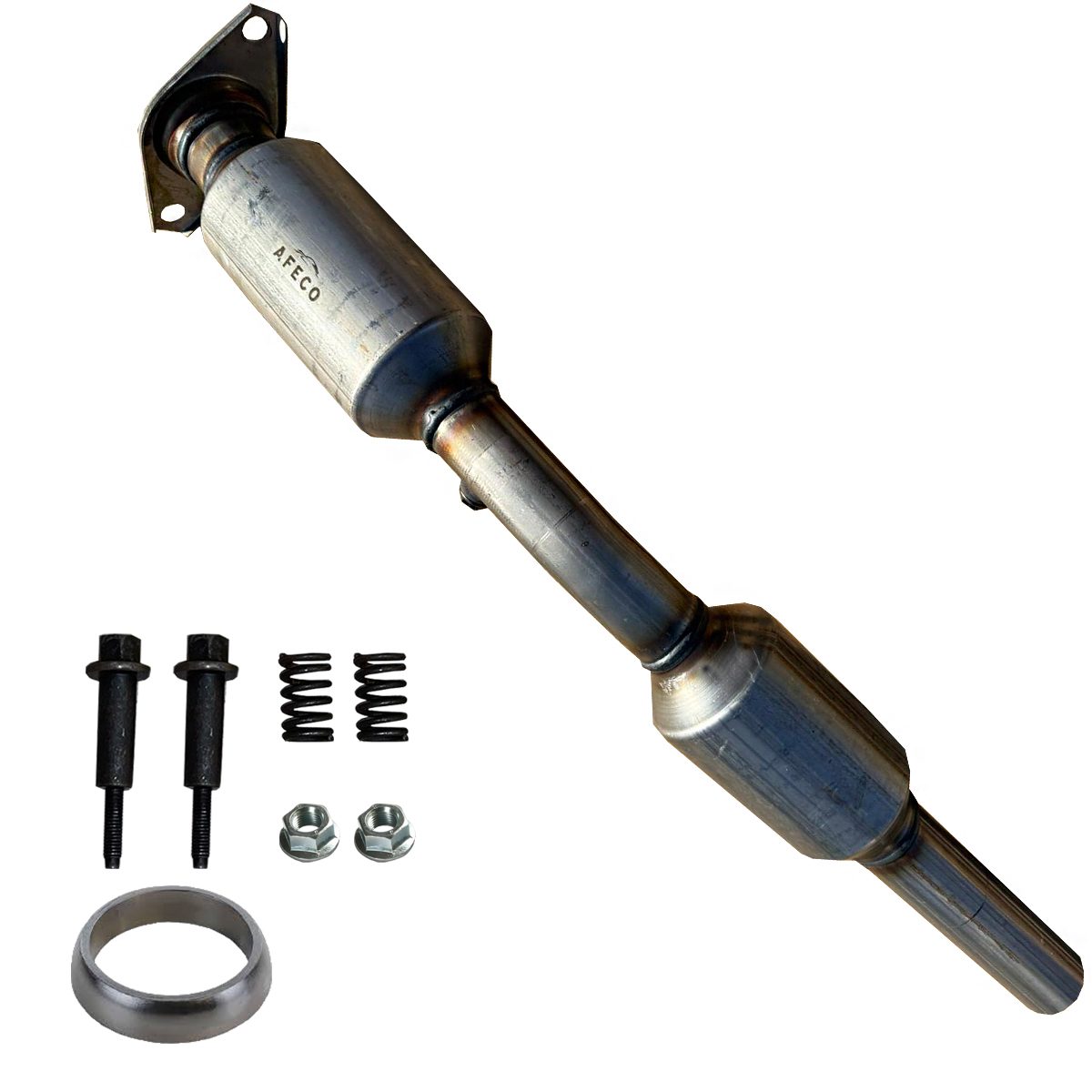
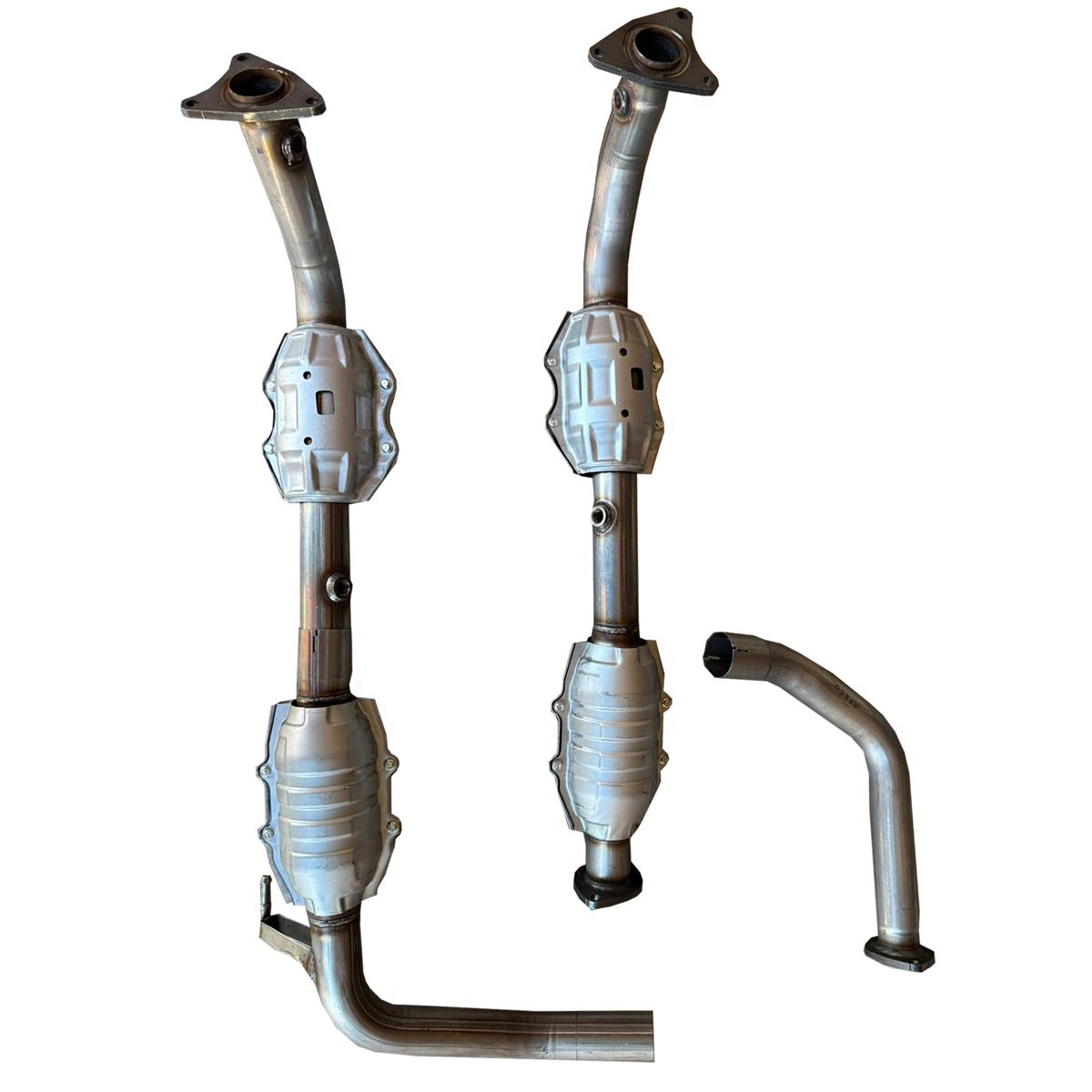
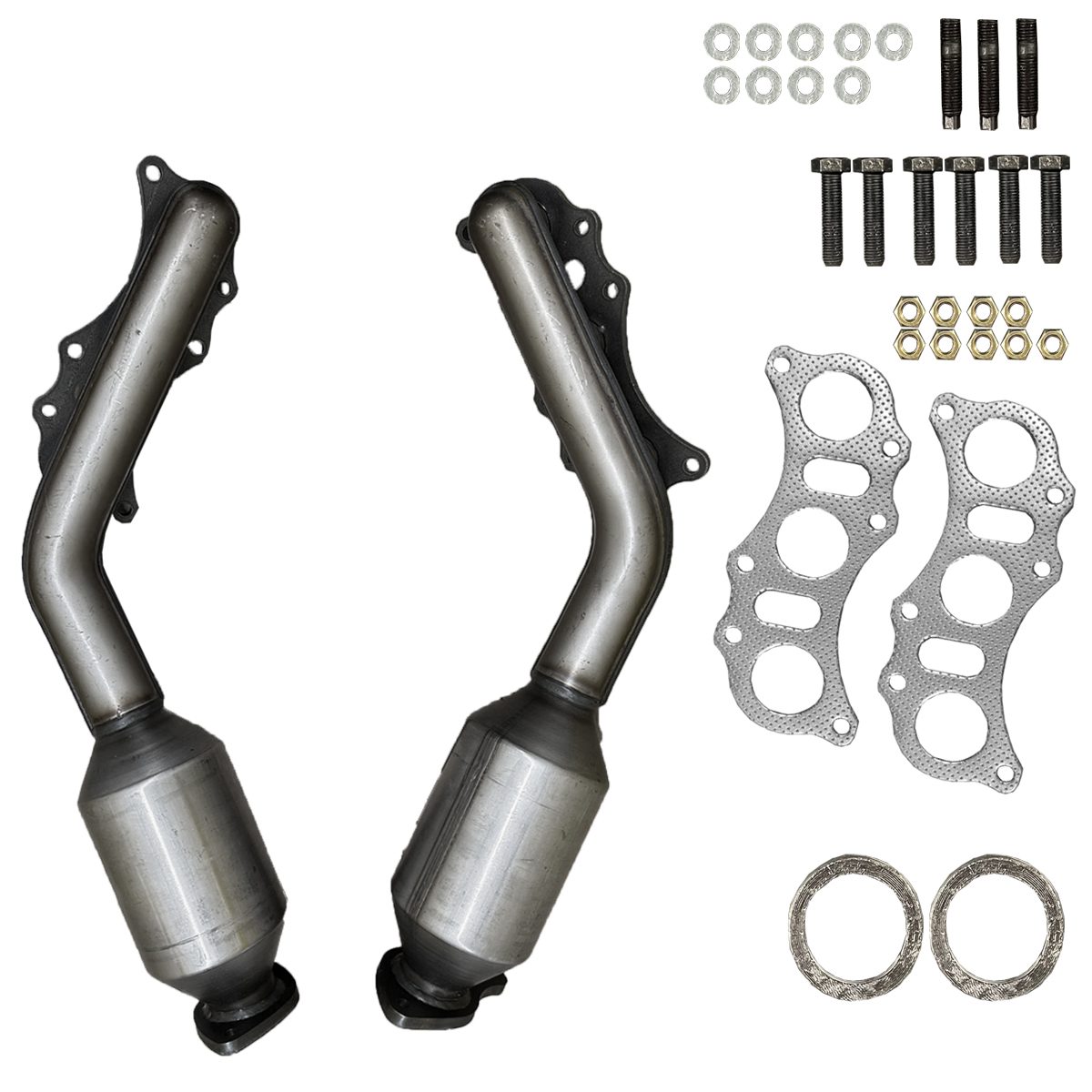
Related AFECO parts
Direct-fit converters for the vehicles listed on each page.